We’re All in This Together

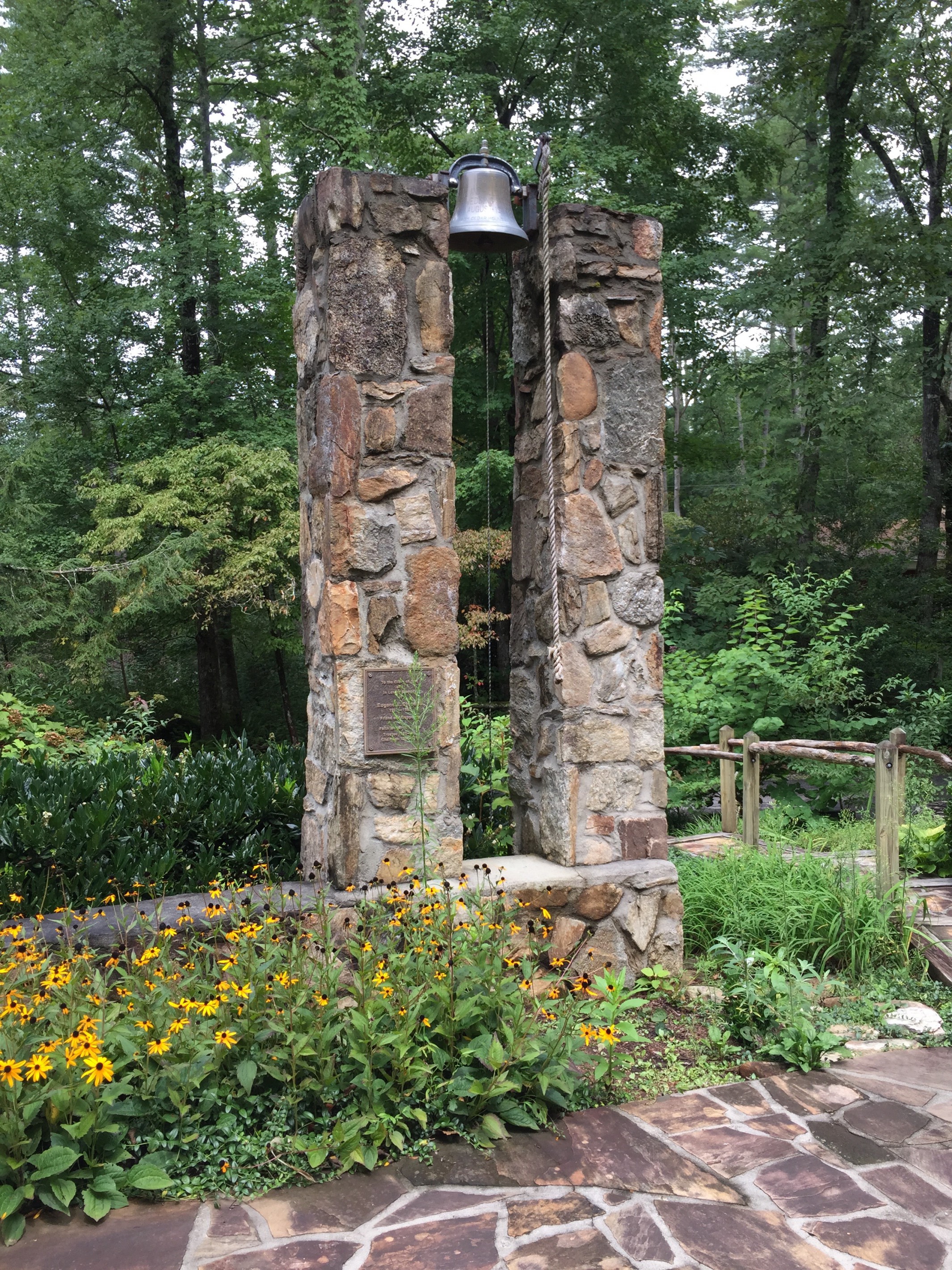
IMG_4026I went to church this past Sunday; I went because it is the Hebrew month of Elul, a spiritual time of preparation for the New Year. I went because the chapel is at the one mile marker of my walking route; it is open air with just a ceiling and pews; no walls to close it in and almost every Sunday when I walk by there is beautiful congregational singing and the voice of a pastor preaching, or bells or communal readings and recitations of faith, and I thought I haven’t been all summer and this is a good time to see if it can help me on my journey to a new moment in my life. And besides, I had a walking friend willing to join me and it is good not to be alone in church (or synagogue).

I didn’t know any of the hymns except the final one, which was set to the “Ode to Joy” melody of Beethoven’s 9th. An aside: Do all those notes above the words in the hymnal really help you know the melody if you can’t read music or can all church goers read music? None of the creeds or confessions of sin worked for me – too Jesus centered but the Lord’s Prayer felt pretty Jewish. I was surprised that there was no reading from the Hebrew Scriptures; I thought there was always one that was then counter levered with a reading from the Christian Scriptures. I was disappointed because I like to see how the two play off each other.

The sermon was text based. The priest (Episcopal) retold the story of a pivotal moment in Jesus’ life – when he says to his disciples: “Those who eat my flesh and drink my blood abide in me, and I in them.” (John 6:56…) The disciples tell him that the teaching is difficult and they are not sure they can accept it and some of them actually turn back from following him. Jesus confronts the rest of them and asks: “Do you also want to go away?”

This is what the sermon said to me. And since I am in church let me stay with the metaphor. We all have “come to Jesus” moments; we all have times when we must make decisions and face the hard and the difficult straight on and either work with it or walk away from it. All our faith traditions teach this. You can’t walk through life unscathed. We struggle to be born and like a seed pushing its way through the crusty dirt, we grow by facing those things that are tough for us. Some challenges are so hard, we want to run away from them and some we confront and work with and turn into learning opportunities. Some cause pain; some bring insight; some we just never understand.

There is a beautiful image in the Hasidic tradition that during the month of Elul, God is out there walking in the fields, searching, seeking, waiting, and watching. Elul is the time for me to leave my comfort zone, confronting with compassion and with love the hard, the tough, the challenging, the unsettling. I’m glad I went to church last Sunday.  It helped me in my Elul preparation.  It reminded me that God has many houses and one thing came through loud and clear.

We are all in this together.
What’s Next?

I have aIMG_3904 friend who is an artist and I was with him yesterday.  He was showing me his newest piece that he is working on and we got to talking about the creative process.  I compared my limited writing experience with his painting and reflected that after I finish one post, I am constantly on the look out for what’s next.  “Ah”, he said: “the artist’s favorite question: What’s next?”
So today I was on a plane and the guy next to me (in the middle seat) was big. He was shoulder, arms and chest big, not fat big. But he overflowed his seat and he and I played a constant dance with the armrest until we figured out that we would just have to live with touching unless one of us retreated and gave up ground. (Thank God he was wearing long sleeves.)

It all was fine till he spilled his Bloody Mary all over himself and over one side of me. His blue plaid shorts turned purple and my khaki pants were a kind of magenta. “Club soda”, I said, “let me ask the flight attendant for paper towels and club soda”. He apologized profusely of course and I told him, it was ok – not to worry, and even though I really thought he didn’t need the coffee, the book, the glass of ice and the can of Bloody Mary mix on his tray, it was ok and I didn’t want him to feel any worse than he did.

This is what’s next I thought. We tend to think that the creative experience comes out of extremes – deep pain/depression/sadness or profound joy/ecstasy/beauty. And it is in one or both of these polar opposites where insight and meaning are often found. But we learn from every experience, even those in the middle.   What’s next? How you react to the unexpected spill.  How you make another person feel when they accidentally hurt you. The measure of the people we are is probably impossible to calibrate.  But I would bet that a large segment of the metrics is in the ordinary ways we react when the unexpected happens.

Life is filled with lots of surprises especially when you are surrounded by people. Find a way to be gracious and kind; it could have been the other way around. Accept how flawed we all are; how blemished the universe we live in is; how we are not in control, not even remotely.

I like observing how I behave in the ordinary moments (not that I am satisfied with all my behavior)  – they may not make great paintings that will hang in the Met, but they just might make good people who can change the world.

Good Things To Remember

IMG_3903I love living in a small town. (Even if it’s only part time.) Everyone is friendly; everyone has something to say. This morning, I walked into a jewelry store to pick up a repair. I gave my name for identification, and a man having a new band attached to his watch, asked: “Oh do you live in Sherwood Forest?” “No, but near,” I answered trying not to make a Robin Hood reference. “New people by the name of Shapiro just moved in – must be a relative,” he continued. “I guess, if you go far enough back.” Thanking the salesperson, exiting the store, I added: “but when you meet these new Shapiros tell them there’s another one around.”

End of conversation, but not in my head. Inside, my grandmother and grandfather, Bessie and Louis, were alive. They came to the United States in the early 1900’s along with two million other immigrants from Eastern Europe. Like many of them, my grandparents’ last names were more a function of the whim of an immigration officer rather than a long family history. Not to confuse the issue too deeply, but my grandmother’s maiden name is Shapiro and my grandfather’s brothers are all named Ashepa. I sometimes wonder if my life would be different if my last name began with “A” instead of an “S” and I stood at the head of the line, was the first to be called on during attendance, sat in the first row?

We’ve lost the name of the little Eastern European town (shtetl) where Bessie and Louis met and married. And whatever relatives who stayed behind are gone – murdered gone – not just gone. But I want to think that their small town was like this one – where people smile and greet you as you walk down the street, where in the supermarket parking lot, shopping carts are returned to the “cart alley”, where the postal person knows your name and helps you tape your package.

I may be idealizing it all, but I like this niceness. There is a wonderful strand of Jewish behavioral teaching, called Mussar that says: You have been given this gift of life in order to repair the world: to leave it better than you found it. We call this Tikun Olam. The uniqueness of Mussar is that it teaches. We do this work of fixing by beginning with ourselves. And we change from the outside in. Do good deeds; act more kindly; speak with compassion; see the image of God in the person walking toward you, and you become a better person and each loving act repairs your self and the world.

It is a good thing for me to remember as we begin this month of Elul, beginning the month long preparation to welcome a New Year and a new opportunity to start again to build goodness into this cosmos. It is a good thing to remember as I return to “civilization”.

God & Republicans

republican debate

So the question went something like this: “Did God speak to you and give you a list of the things you should do on the first day you take office as the next President of the United States?” (Not exactly, but “close enough for folk music” as Theodore Bikel, z”l, used to say when he was tuning his guitar.)

It was near the end of the first Republican Debate and not every candidate got to answer it. I was amazed that the question (which came from a Facebook user) was even asked. I could do a whole riff here just on what the word God means in that sentence. Not that there is anything wrong with inquiring about a candidate belief system, what’s wrong is assuming that believing in God is a marker of how a candidate or a person will behave. It pains me to say this. There are too many “God fearing” people out there whose behavior is far from godly.

Except for Rubio’s joke, that God has blessed the Republican Party with so many good candidates and the Democrats can’t even find one, no one really answered the question well. I wanted to hear someone (all of them) say: My personal belief in God informs the person that I am. It does not inform the person that you are. My faith commands me to respect you and your belief or your non-belief. Just as I have the right to translate my convictions into how I live my personal life, so do you. I believe that God has given us all the right and the responsibility to make our own decisions and I will not use my position as President to force my belief system on yours. And that includes – who you will marry; how many children you may or may not have; whether or not God has chosen this country for a special role in this world; how you live and how you die.

I don’t know about your mind or your heart or wherever you “hear” the word of God, but I know this about mine. Lots of the times, it is hard to know who is speaking. So when I listen, I am really careful how I translate what I hear. When I listen, I try to do so with an abundance of humility, a lot of doubt, and in the spirit of the Rabbis who understood when hearing two sides of an argument: Elu vi-elu – both of these are the words of the living God.

Finding God

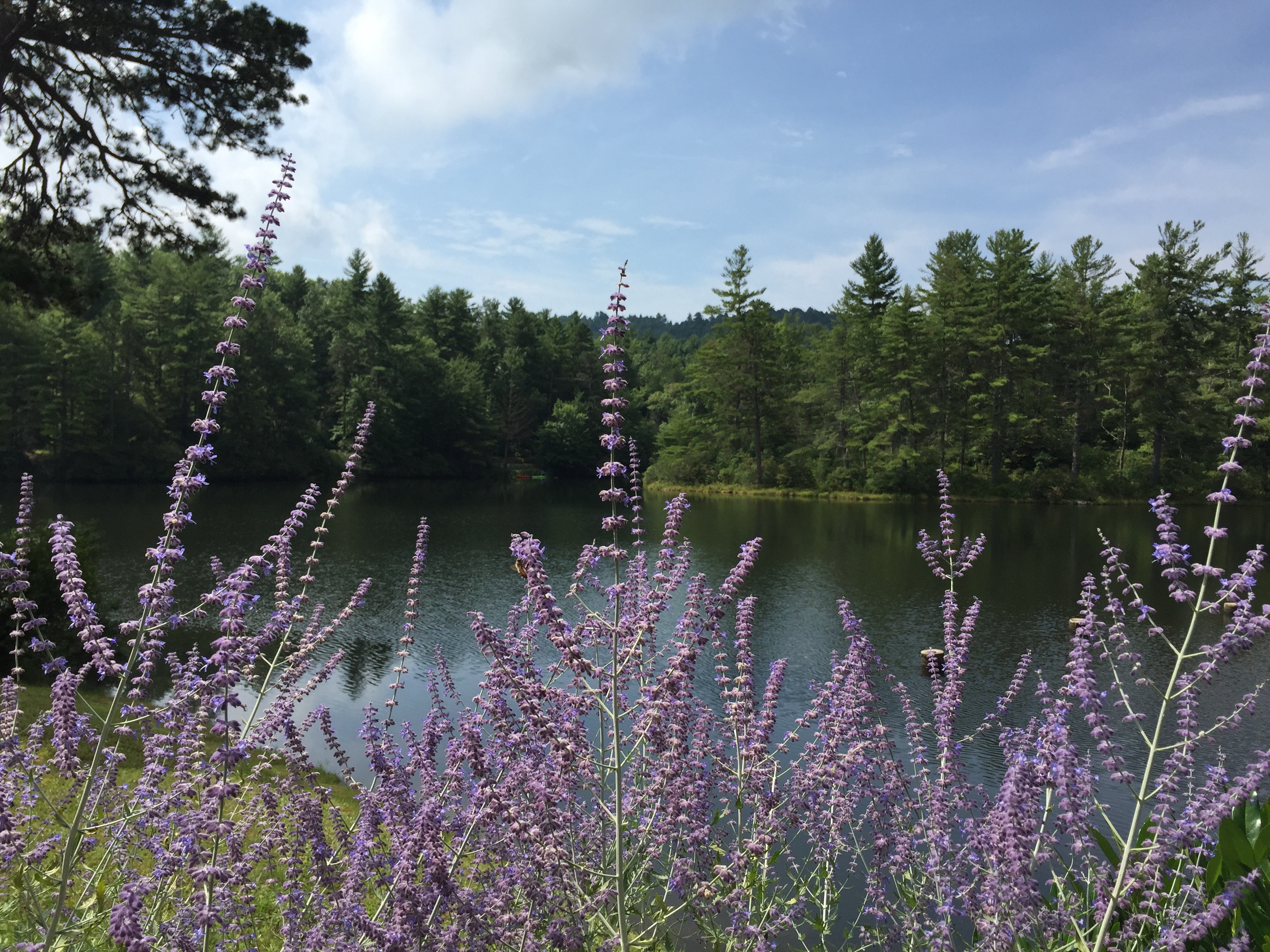
IMG_3856I was out for a walk this morning, trying to get my “steps in” when this is what I saw.  I have probably passed it multiple times before but either the sun on the outside or the light on the inside prepared me to notice the purple flowers with different eyes.

I think they are called Russian Sage. I took out my phone and began the almost instantaneous decision of how I should compose the scene. How liberating not to have to worry how many pictures are left on the roll, not to have to crank that lever and hear the film advance.

Did I want to look at them or through them? When I look at them I think of what they are and who they are. I ask their name, their species, what they need to be and become. An internet search says they are native to Central Asia and have relatives in the mint family. They like full sun and well drained soil but struggle where it is hot and humid. Plants like people have their own sense of space and place. Plants like people thrive best where they are meant to be and not necessarily where I want them.

But I digress. I would rather look through them than at them. It’s not the sage I am looking at. It is the way they play with the water and the sky. It is the spaces between the long thin lilac branches. It is the places where no-thingness can live, where I find God and where God finds room to breathe. Yes, God breathes or God is breath. Yes, God needs space or God is space. One of the names for God in Hebrew is HaMakom – the Place, like in the emptiness between the stalks where you can see the long view. I like describing what I mean by the word God as my “long view”.

It helps me find my self. It helps me find my still small place in the universe. It reminds me I am not at the center. It inspires me to strive to gaze back, peer forward, and discover that this is where I am meant to be. This is where God finds me and this is where I find God, centering myself as one small piece of a connected landscape. It’s a little bit of Buber and I-Thou. It’s a little bit of Heschel and Radical Awe. It’s a little bit of me and how I strive to find the sacred within and in between the places, people, plants and things that make up this world we all share.

Disclaimer or Fine Print:  This is often easier to do with plants than with people.  (Just saying…)