It is Tisha B’Av – the ninth day of the Hebrew month of Av and for many Jews it is a fast day; it is a day of mourning – remembering the destruction of the first and second Temples in Jerusalem and some say the expulsion of the Jews from Spain. Maybe because of its placement in the middle of the summer this is not one of my top ten holidays. Maybe because I have that old Reform theology in my head that asks where would we be if we were still offering animal sacrifices on a centralized altar in Jerusalem. Would we have synagogues; would we have Rabbis; would we recognize ourselves?
But this year Tisha B’Av snuck up on me and said: pay attention. When the Temple was destroyed and Jerusalem laid waste, our national identity was destroyed. The second Jewish commonwealth disappeared and although not erased from history, we began our dispersion, our wandering, our dependence on the tolerance of emperors, monarchs, religious leaders, dictators, and political systems we were not a part of. And so began the slow and tortured march to the Inquisition and the Holocaust.
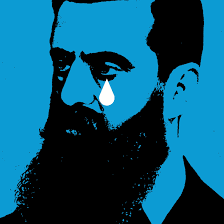
It took us almost 2000 years to regain Jewish sovereignty. When Theodore Herzl championed a national homeland for the Jewish people and created modern political Zionism, he envisioned an open society where Jews of all stripes and colors, all beliefs and cultures could feel at home. You can read about it in his utopian novel, “AltneuLand” (Old-New Land), published in 1902. If you are following the current Israeli political crisis, you know that many observers believe that the crisis concerning the “judicial overhaul” is about Israel’s national identity. Will it continue to be open and innovative, pluralistic, democratic? Will it be the Israel we are so proud of?
Tali texted me yesterday and asked – are we an ethnicity? I don’t know if she was filling out a form or where this came from. (Texts are limited in the amount of information they impart.) But I answered: “Yes, and more. Its complicated.” Well, it is and it isn’t. We are a people; we care about each other; we care what happens to Jews wherever they live. Do we care more than we care about non-Jews in Asia or Africa or Central America? Well language tells a little bit of the story. We divide the world into Jews and non-Jews. We care about people in need everywhere, but we begin by caring about our own.
And so Tisha B’Av. If nothing else, tells the heartbreaking story of Jewish powerlessness. It reminds me how much and why I care about the future of Israel society. I am so proud of the scope of the Israeli protesters who are writing a new chapter in Herzl’s novel. They are fighting for the soul of the nation. They give me hope and that’s not a small thing. I am proud of every step they take in their march from Tel Aviv to Jerusalem, in their willingness to stand up for their ideals. I may be idealizing them and maybe a little naïve, but I think they could teach us a thing or two.
 rabbiunplugged
Amen. I fully concur!
LikeLike
Absolutely yes to all of this, Rabbi. So proud of Israel right now. And, yes, they could teach us more than “a thing or two.” Wish Americans would wake up, see what’s happening in our own country and take a cue from the Israelis.
LikeLike
My heart opens again by your words. Particularly moving today on my 88th birthday.
Thank you, Dear Howard
LikeLike
Happy Birthday. Stay well.
LikeLike
Proud of the protesters but not as hopeful as you are. Years ago, a Jerusalem cab driver told me, “If we Jews didn’t have the Arabs to fight, we’d kill each other.” I pray his prophecy doesn’t come true.
LikeLike
Thanks for this, Howard. I’ve been watching with concern. It is such an irony that liberals want every POV represented — including from the Right. But the Right refuses to work with the liberals that let them in because, well, they are always RIGHT.
LikeLike