Feeling Reflective

DSCN2656I have set my computer screen saver to change pictures every five minutes and randomly select them from the photos I have loaded either from my camera, my phone, slides I have had digitalized, images shared. I readily admit that I have no idea how to control the choices that fade in and out and I notice that some pictures rotate more often than others. I fantasize that the computer is laughing at me and playing hide and seek with my pictures.

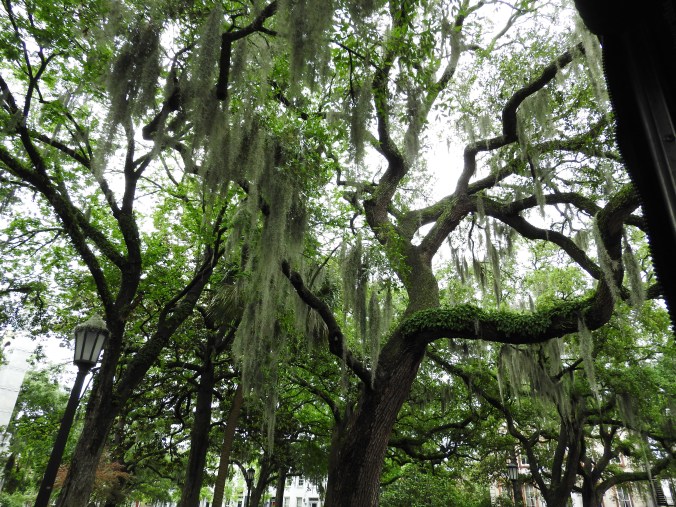
Each picture is a memory and a slice of my life. Maya and I are feeding a dolphin in one; the illusive, mysterious moss hanging on twisted trees in the squares of Savannah; aqua green water peppered by red and white buoys floating in the Bay of Nhatrang, Vietnam; the beige sand of a Moroccan flea market punctuated with the saffron and purple head coverings of the women hiding their faces and shopping for bargains; stages of life reflected in my different body shapes, hair styles, clothing choices, each one a sacred moment, each one an opportunity to mentally move along the arc of my life.

Sometimes the computer program zooms in and only part of the picture shows up on the screen. This morning I had a close up of my smile and my teeth – my dentist would have been proud – I laughed when I saw it but I think I could use some whitener. Sometimes I have to challenge myself to figure out where we are. Invariably the process touches me in places deep and inside even when I can’t remember the name of that site, city or setting.   It is often tinged with sadness and loss; but more often than not, if I let myself linger in the memory, I feel a profound gratitude for that which I have been given. Each moment is a different letter in a blessing formula.

But my challenge to myself is to extend that thankfulness to all of life, even that which is not apparently striking. I tend to take pictures of the beautiful and surprising but that is not the complete picture of life. There are photos I did not take with a camera but are still imbedded in my internal album: my mother curled up in her bedroom deep in depression; the steps I tripped up when I was given the honor of opening the door of my grandfather’s synagogue where the hearse stopped so that the Cantor could ask God to bind his soul in the bond of eternal life.; the dreams that astonish me in content and vividness in the middle of the night – the ones that wake me up and sometimes serialize themselves after I fall back to sleep. And I could go on.

All of these teach; all of these make me who I am; the good, the beautiful, the embarrassing, the disappointments, the successes, the endeavors I wish I had finished and the relationships I wish I had done differently. All of these are opportunities for introspection and growth. Even those out of focus.

Enough, it may be cloudy right now but there is still a golf ball wanting to be hit.


One No Trump

one no trump

There was a great article by Nicholas Kristof in the Sunday Times a week ago. It is called “A Confession of Liberal Intolerance”. He writes about us liberals, and talks about how willing we are to listen to all kinds of points of view, want to bring everyone to the table, no matter what their color, gender identity, national origin, faith, culture, unless they are conservatives, and especially conservative (read Evangelical) Christians.

It resonated with me in this political season. I mean we were so concerned with the rhetoric of the Republican Right and we along with practically everyone in the Media so underestimated Donald that we couldn’t believe that we would wind up with him as the “presumptive nominee”. I secretly believe that somehow the Republican Party will come to their senses and there will be a miracle in Cleveland. I have so far declined to sign my name to a “Rabbis Against Trump” movement saying to myself, it is too early, too soon, this too shall pass.

I also fantasize that Mr. Trump will stop the act and show us that he is more than a great showman and the best barker in the circus. He will become Presidential as they say and address the real issues facing this country without resorting to name calling and hitting people in their under bellies. I would like to be faced with ideas that challenge me even if I can’t agree. I think Kristof’s point that we learn from those who challenge our assumptions and beliefs is right on target. There is nothing wrong with an honest argument. I would like to know more about how we effectively control the immigration issues without a wall and who will pay for it. I am curious how his policies would grow the economy, raise the standard of living, put people back to work, make America great again, cut taxes and keep businesses from fleeing our shores.

I would like to be faced with one of the fundamental challenges the Rabbis faced when compiling the Talmud. What do you do when people disagree; when principles clash; when all parties believe that they are right and their reading of what is right for America is the one and only position to take seriously? You look at motives; you examine the core; you seek out basic truths. The Rabbis taught: “Kol Machloket…. Every argument for the sake of Heaven will in the end be of permanent value, but every disagreement not for the sake of Heaven will not endure.” They tell us it is ok to disagree; it is ok to have your principles challenged. We learn that way.

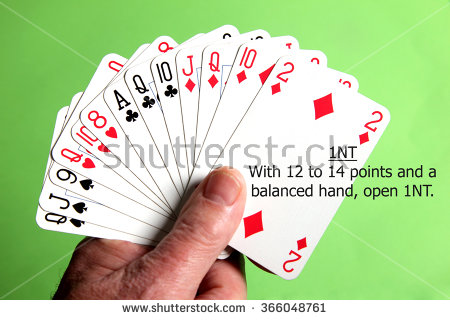
Eileen and I play bridge with friends – one of whom is way more bridge savvy than the rest of us.   She says that one no trump is the hardest contract to make. The cards are usually fairly evenly divided and no one has said very much so it is hard to even guess who has the strong cards and what is in each player’s hands.

Not a good way to pick a president.

Babka Is Back

babka_duo_index1a

I don’t usually do this but to “get” this blog you might like to go back a few months to the blog of January 17th titled, “Is It Good Enough?” It was about these blue cards I found that date back to the 70’s – sermons – typed – like on a typewriter – and filed away, forgotten till now.

I was reluctant to read them, not knowing what I would find: Were they good; have I grown; did I bring insight and meaning to my listeners? They are my “chameitz” – the yeast that causes the dough to rise. Passover is over but all that attention to labels and order freed me from the power of the past to bubble up and control me. Passover worked for me; it gave me the ability to start again knowing the doubts and sense of inadequacy would be back, but that’s why we play this Seder game year after year.

So the genie is out of the box. I’ve opened the files and on a beautiful Florida day, I schlepped them outside and sat in the sun reading my past. It helped that our granddaughter, Sammy, was sitting next to me. So here are a few reflections.

They are mostly High Holy Day Sermons and they are mostly too long. I think I love my words too  much and find it hard to hit the delete button. But they are interesting in ways that surprise me. Themes reoccur: I talk a lot about my self and what I am struggling with (as a parent, a teacher, a believer, a skeptic). I talk a lot about Israel; it is fascinating to see  how that conversation has changed over the years.

There are some good stories that I have forgotten and can probably use again. Like: “When a Yeshiva student came to his Rebbe and boasted that he had gone through the Talmud five times, the Rebbe turned and asked: ‘And how many times has the Talmud gone through you?’” It leads me to ask: How much have these words gone through me?

My eyes were better then. I can’t believe the size of the typewriter font. But was my vision? I’m impressed that even then when Israel’s survival was sometimes in doubt, I thought out loud “survival can not be enough. We cannot be dependent on our enemies to define us.” Why be Jewish is not a rhetorical question; it touches the heart and the soul of each of us.

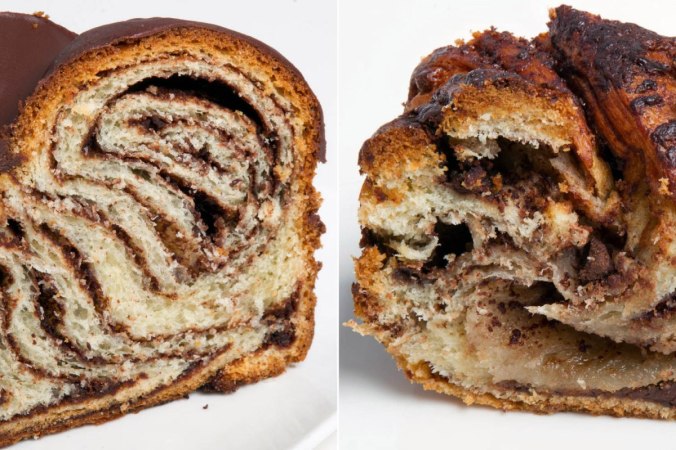
Forty years ago, in 5736, (I dated my files by the Jewish year), I announced, “Babka is back” and in 5776 its back again. According to the Today show it is here to replace the cronut as the latest pastry obsession. Everything is cyclical or as we use to say in New Jersey: “What goes around comes around”. But that has a somewhat different connotation and usually involved a little bit of self-satisfying glee. It is good to be right. Which brings me to an ending. I wasn’t always good. I wasn’t always smart. But I tried and sweated out every word. I tried to reach beyond the lectern. I laughed when I read one of my sermon openings: “Relax – let down your defenses – I am not here to yell at you. I am here to search with you.”  Yes – for leaven, for yeast, for anything that can help us rise above ourselves.

And by the way or to the point:  where is there good Babka in South Florida (chocolate – the deep dark rich kind that doesn’t crumble when you cut it, that can be toasted and spread with butter.)?  OMG, I’m in trouble.


Yellow Blossoms & Matzah Crumbs

Image 4-7-16 at 11.20 AMI like April. It is Purim behind, Passover in front and Easter floating somewhere in between, tied to the first full moon after light and darkness halve the day. Esther averts her people from pending destruction; Moses leads the Israelite slaves on a journey to a promised land; Jesus becomes more than anyone thought he could be: salvation, deliverance, redemption.
I like April. It is National Poetry Month and every day I receive a new poem in my mailbox. They humble me these poems like todays by Robin Coste Lewis. The author restricts her words to fragments of book titles, catalog and exhibit entries in which a Black female figure is represented. She brings us a meditation on race and a record of a different kind of journey through time and place, also one of promise but like almost all, still unfulfilled.

I like daffodils fighting to break through winters hard and unforgiving crust demanding we will be born again; dogwood trees blossoming stark white against the deep dark bark. And for those of you who are Florida averse and complain you miss the seasons, driving home yesterday, I caught this Tabebuia trumpeting hints of grace and salvation just next to the curb. They like to drop their leaves in March and early April, replacing them with these brilliant yellow flowers. We had one once but for all its splendor ours blew over in a storm, either the roots too shallow or the wood too brittle. There is a price to pay for almost everything, including beauty.

I like this holiday of spring that calls on me to renew myself. I like searching for the parts of me I think could be better. I like the questions that spiritual work engenders. There are at least four. It brings me to Passover and all its symbolism and rituals; it brings me to Passover and all its rules about which way I lean and what I can eat. This year it is really late – I know the lunar calendar verses the solar and the need to add an extra month to the Hebrew calendar so that holidays hang in there on time and Passover doesn’t migrate across the years to mid summer. But this year I appreciate the extra time it is giving me. It feels like there is breathing room to prepare for the Seder with all its directions and instructions.

“Break the middle Matzah in half.” How did they know that’s impossible?  There is always inequity. And they take that reality and make it work – save the larger piece for the Afikomen, a sacred game of hide and seek. That broken piece of Matzah is well over half the world who are still waiting for us to find them and help them become whole. That ridged, perforated, flat excuse for bread commands us not only to remember that we were slaves but also to act, to care, to reach out in compassion for those whose lives are still embittered

The yellow tree is poetry; it is Passover; it is a promise of potential. The winter is gone; new life is blossoming. Indifference to the myriad of plagues that flood our inbox need not be a permanent affliction. We have power; we can change tomorrow; we can do it one matzah crumb at a time; just picking up the pieces and remembering – this year we are slaves; next year may we all be free.


The Hole of Knowing

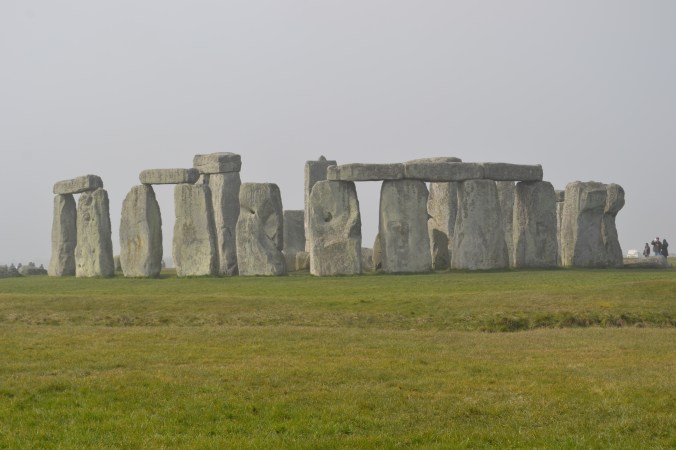
DSC_0120The bus collected us at Victoria Coach Station for our excursion to Stonehenge. It was Eileen, our grandson, Corey, who is studying London for a term and me. Don’t get me wrong, there were 48 other people as well, but there was WIFI on the bus so you could stay in your personal space, except for Eileen who knew an awful lot about her seatmate, Dr. Dave before we hit the M3.
As we left the highway and the tour guide got back on the mike, it was still early morning: “You should be able to see Stonehenge in that field on the right but the fog and mist is hiding it. Hopefully it will begin to lift before we take the shuttle bus from the visitor center to the site.” I sort of thought, this is how you should see Stonehenge, a little bit of mist and a little bit of mystery, although, I did want some good pictures.

And then she was right and then it was there. Across the fields, the sheep were barely moving, little non-discriminate mounds in the grass, everything shades of grey. Stonehenge slowly emerged: a statement to a civilization and culture that knew how to keep its secrets, from how they got the stones here to what their purpose. Yes, there are theories and I am sure some day one of us humans will figure it all out, but right now they range from the magical to the ritual, the astronomical to the sacred, a place of healing and magic or a place of sacrifice and death. I like some of this unknowing. I believe in mystery. I am attracted to the mystical. It makes me appreciate the hole of knowing at the center of life.

So it was ok with me that the sun wasn’t shining. The ancient stones were resting on a bed strong enough to keep them erect and resilient enough to keep them mysterious. It was ok with me that I wasn’t certain if the stones may have been a place where the sun and the moon found alignment or the stones may have been a place where people were sacrificed to some unknown but demanding deity. What isn’t ok is that centuries and millennia later we are still finding reasons to believe that the gods want us to kill and to maim, to blow up suitcases and people and the smoke that rises from the explosion is a sweet smell of obedience to a cruel and uncaring universe. What isn’t ok is to believe that these acts of terror are courageous or even part of a holy war one civilization wages on another.

What’s sad is that we have lost the meaning of the word mysterious that for me implies knowing that you don’t know. I believe built into the word sacred is the word doubt. I believe in a healthy dose of skepticism in my approach to faith and it is a wonder to me that independent of the physicality of my brain, I am conscious of life I live. There is a wonderful Jewish teaching that the black handwritten Hebrew letters on every Torah scroll are only half the story. The creamy white spaces between each letter tell the other half. So maybe it isn’t the stones at Stonehenge – maybe it’s the galaxies in between and their placement in this field of fog, mist and haze.

In my worldview that which is sacred is the humility to be in awe of how much we do not know.  No one has a lock on truth.

God Thoughts

flower windI just read three stunning sentences. They made me stop and reflect on how they are calling to me. They are from a book that my friend and co-teacher Tom O’Brien recommended. We were preparing for our class (God, Politics and Culture) at Florida Atlantic University’s Life Long Learning Society and we were talking about “The Problem of God”.
We were asking, what does the word, God, mean? The problem is when people proudly say; ‘I don’t believe in God”, something inside me wants to respond and sometimes does: “Which God do you not believe in?” More often than not, I don’t believe in that God either.

The book is called, “A God That Could Be Real” by Nancy Ellen Abrams. Here are the sentences: “Has something terrible ever happened to you or to someone you love? God had nothing to do with it; God doesn’t control events. God influences how we see the events and interpret them.”

Maybe out of context they are not as stunning as I thought they were. But this is what they said to me. This world is hanging on by a thread. There is so much violence, anger and terror. Perfectly innocent people get killed at a moment’s notice as they fly home from snorkeling in the Red Sea, as they walk near a mall in Beirut, as they wait for AAA by the side of their car in Florida, as they sit in a classroom in their University, as they attend a concert in Paris, because they are black, because they are white, because they are women, because their gender identification calls them to dress differently, or for no good or bad reason at all. And it is not God’s fault. “God has nothing to do with it.”

So what does God do if God doesn’t hang out there in the universe moving people, clouds and planets? And why is it important anyway? Because people are getting killed in God’s name (again); because people are using what they call religion to justify evil behavior (again); because people and politicians find that the God word is a convenient excuse to bully people into believing that there is only one path forward for America, one way to make America great (again).

I recently heard Rabbi Donniel Hartman speak about his new book, “Putting God Second”. I love the title. It is a great metaphor almost like theological poetry. I hope this isn’t blasphemy but for me, that’s where God “resides” – behind us motivating and inspiring us to put people front and first. The image in my head is from Genesis when the “wind” of God is hovering over the surface of the waters. I see the water rippling and God is pushing it so the dry land may appear. I feel God separating light from darkness so there can be daylight.

God is behind the scenes inspiring me to be the best I can be so that the world around me is more compassionate, kind and caring. And one more thing: God can only work through us. Our actions, our love, the way we walk through this world and navigate with the people around us, all of the above, allow God to “be”.

It is early morning; the house is quiet; the traffic hasn’t hit its peak; I can hear the birds singing outside. I wonder if they feel the wind of God lifting their wings, pushing at their backs also.

Life Asks Us Questions

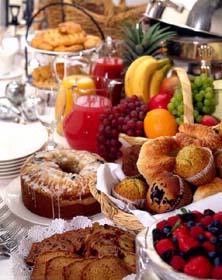
BrunchI was at a brunch last Sunday that celebrated the 25th anniversary of an organization founded by child survivors of the Holocaust. It was filled with people and food, memories and determination, laughter and love, persistence, perseverance, pride. Twenty-five years since they came together finding meaning and comfort in being among their own. Twenty-five years since they banded and bonded to tell their stories to whoever would listen, to be living witnesses to words that are too often just paragraphs in history books, to teach the multiple lessons this horror had taught them.
They call themselves: The Child Survivors/Hidden Children of the Holocaust.

For their definition a child survivor is simply one who was a child during the Nazi years of planned extermination of the Jews of Europe. They lived in any number of settings from concentration camps to forests, from attics to cellars. Some were hidden by righteous gentiles, some hid themselves in places we can’t even imagine, all survived by a miracle that is theologically unsound. Depending who you ask, it was luck; it was God. This they do know: “Anachnu Po – We are here”, the first words spoken even before the blessing over the bread, opening the buffet. This they do know: they are dedicated to the memory of the six million Jews murdered by the Nazis, one and a half million of them children. This they do know: they are committed to telling their stories so that the listener will know: “all people deserve to live in peace and in safety”. (their own words).

Steven Hayes, developer of Acceptance and Commitment Therapy opens a Ted Talk, I recently watched with these words: “Life asks us questions. And probably one of the most important questions it asks is what are you going to do about your difficult thoughts and feelings …” Here is how I filtered his words. We make a choice in how we respond to what life throws at us – not necessarily an easy one, but a choice nonetheless. For me this coming together was all about choosing life. Choosing to live even after life itself had been vicious and cruel. Choosing to live even though all that you loved was ripped away, torn apart and burned.

The tables were round and they were full. The woman sitting to the left of me was not a child Survivor. She was born in a DP (Displaced Person) camp set up after the concentration camps were “opened”. It was an act of defiance and faith to have children at that moment in time. It meant you would not give Hitler any semblance of victory. And children point you forward towards the future, towards new life, new love. (Full disclosure, I know to use the terminology “opened” and not “liberated” because the person to the right of me was my wife, Eileen, former Holocaust Program Planner for Palm Beach County Schools. She taught me that the first concentration camps were actually stumbled upon and not knowingly liberated. (Let’s remember history as accurately as we can.)

It is several days since I digested (both figuratively and literally) the speeches, the songs, the dancing, the food, the joy. I am holding on to it. The author of Proverbs wrote, the human spirit is the lamp of God. I found a tremendous spirit at that brunch. Does that mean I also found God?


I Am Not Usually Political

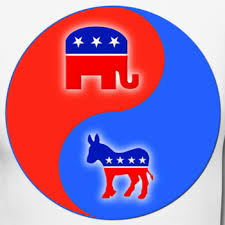
DemsRepubsI am not excited with our presidential political process yet. I should be; there certainly has been enough drama and the spectacle has unquestionably been anything but flat. But it’s been a show. The real issues that touch people’s lives and that impact our culture and society are back stage and haven’t broken through the fourth wall.
Not that they haven’t tried. I think there have been six Republican and five Democratic debates so far. The sponsoring network tries to make the run up and the follow up compelling, but somehow I don’t feel connected. And I’m not being partisan here – this sense I have crosses both party lines.

I have tried to figure out why. It is no secret to most people who know me that I was energized eight years ago, excited in “the change we can believe in”. It is just none of the candidates work for me. Conceptually, I would love to see a woman president. With some embarrassment I say, I would love to see a Jewish president, no matter how unobservant. With a little bit of trepidation, I timidly say I would love to see a young and bright candidate whose family are recent immigrants. But nothing is motivating me, until this morning.

Front page of the New York Times, next to a picture of two feet of snow in Prospect Park, Brooklyn, there is this headline. “Bloomberg Is Considering 3rd Party Bid.” My heart soared. I read the article through carefully. Is there really a chance that a knight in shining armor can come and save this our beloved country? Is there really someone who can galvanize all those people like me who are sick of politics the way it is being played out and don’t want to vote for any of the current runners? Is there hope?

Here comes the caveat and my need to back peddle a little bit and make sure I am being clear here.  These words are not an endorsement of Michael Bloomberg. They are a testimony to the need for someone in this political process to understand me and people like me: life-time democrat who believes in an agenda firmly rooted in America’s promise in the potential and right of every individual to live up to their highest potential no matter where they were born, how much pigment they have in their skin, what their religion, what their faith. To know that I am looking for a president who can unite this country with a practical vision that encompasses a plan to address a crumbling infrastructure which for me means bridges and roads but not just physical ones: bridges between races, roads that promise pathways to the American dream for the poor and underprivileged, beltways that force politicians to face the real problems of gun violence and terror both home grown and imported. I want a president who can bring us together and make me believe in the American political process again.

Am I expecting too much? Am I an inveterate and impossibly naïve dreamer? Am I looking for the messiah? You tell me.


Is It Good Enough?

old filing cab

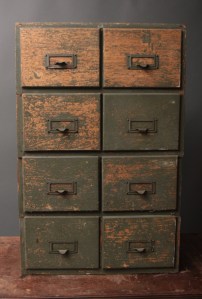
It is at least seven weeks since a metal box containing files with 6 x 8 blue note cards was found in a storage room at the Temple. The blue cards were all filed neatly with rubber bands around each pile, rubber bands that if you touch, now break from age and dryness, even in this Florida humidity. Most of them are typed and they have dates and occasions, rarely titles. It has taken me till this morning to look into this file box. I’m not sure what I was afraid I would find.

They are sermons from the 1970’s. (I know some of you reading this weren’t even born.) I don’t know what is keeping me from going through them. I think it is an adequacy issues – are they good enough. It reminds me when I first began Spiritual Direction. My “director” was a Roman Catholic Dominican Sister who works at a retreat center nearby. When I started she encouraged me to write and journal. I chose to record my sense of the sacred and what being spiritual meant to me at that moment through poetry. The first time I shared a poem with her, she responded with silence. There was lots of silence in those spiritual direction sessions. But I was new and the absence of words felt strange. I jumped right in: Is it good, I asked.

Is it good? There it is. Are they good – those words typed in dark black ink on light blue cards? What has 40 plus years done to them? What have they done to the 40 years? Forty is a special number in both the Hebrew and Christian Scriptures. It rained for forty days and nights as Noah’s ark floated back and forth across the waters. The Israelites wandered for forty years in the wilderness till they were ready to cross the Jordan. Jesus was tempted for 40 days and nights till he passed the test. And that is just for starters. Some say forty is associated with humility; some say transition/change.

I am going to read what’s in that box – there is no doubt in my mind, but not just yet. I don’t know why but it definitely is an adequacy issue. Or maybe it goes back to the symbolic number of the biblical forty. Am I humble enough to be willing to see that I have changed/grown/developed over the years and life is all about transition? Am I strong enough to recognize that maybe I didn’t? The days and the years grow you; the trials and the tests refine you; the blessings, challenges, opportunities and failures hone and polish. Am I willing to accept that some of them may just not meet my over perceived and probably falsely filled standards and some of them may just be plain dated or lousy or saturated with unrealized potential?

This has been helpful; thanks for hanging in with me. I think reading them would be a good exercise in humility. I think it will “grow” me. Stay tuned.


2015: A Hell of a Year


nafs-480x278

It’s been a hell of a year. Are they all like this or was this one just so intense and filled with so many shocking moments that we were reeling from what was happening both during and after. What did it all mean for our children, for our society, our future and us? We struggle with how to respond. We always do. Genesis tells us the story of Jacob wrestling with an unknown man ultimately forcing a blessing and a new name out of his protagonist. Jacob becomes Israel – the one who struggles with God and what it means to believe, to affirm goodness in a dark and fractured world, to stay true to our core values.

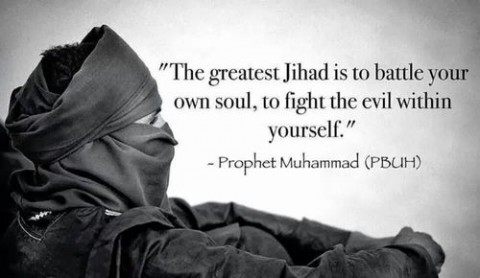
Different religious traditions describe this struggle differently. One of the words in the Muslim tradition for this process is Jihad. Yes, it can refer to a holy war against non-believers, but at its essence it speaks to the internal battle that wages within us between doing what is right living to our highest standards and doing what is expedient and giving in to our base fears. You can position this process in many different frames. Some scaffold it within a religious setting, speaking about the need to submit to the will of God or Allah or Jesus or HaShem (all basically synonyms for the Unknowable). Some frame it within a spiritual and ethical self-improvement venue articulating the need for balance and living in sync with the laws of nature and society. No matter where you are positioned, all of us struggle.

In Judaism we call it the tension between the “Yetzer Hatov and the Yetzer HaRa” – the Good and the Bad Inclination. (Don’t read too much into those words “good” and “bad”, it is way too complicated for 500 words.) Just know we are always weighing our options. No matter what the situation, we choose where to live internally. Shall I live with the fear of terrorism; shall I dwell in the resentment of my freedom of movement being curtailed; shall I sit with the frustration of knowing that Big Brother is listening and George Orwell’s “1984” is closer to prophecy than science fiction. And whom shall I blame and how shall I direct my anger?

As a nation we are in that moment right now. There are those who feed our fears and tell us that the solution is to label those who follow Islam our enemies. There is a tendency to want to find that scapegoat with talk of walls and religious identity cards.

All of that tells me that we need to acknowledge that as real as the problem is outside of us that there are people with guns and bombs who want to destroy our way of living, there is also a challenge inside as well. We need smart and effective ways of dealing with the external threat and we need a conscious awareness that there is a struggle going on a gut level between our fears and darker instincts to close down and circle the wagons and our higher aspirations to be welcoming and open to people in need and ideas that challenge. Islam as a spiritual tradition has much to teach. The word Jihad reflects that struggle. It is an internal process of choosing hope rather than fear, faith rather than despair, acceptance and understanding rather than rejecting and stereotyping those who call God by a different name. We need to be willing to learn from all our traditions and we need to live in that struggle. Out of it comes blessing.

My New Favorite Word

Screen Shot 2015-12-22 at 1.54.14 PM

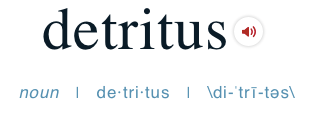
I was at the Dermatologist last week and was told that the bite on my leg that would not go away or stop itching was not from a tick and I didn’t have lime disease. But you never know what detritus the insect that bit me left behind and how the body reacts to it. Context told me what the word, detritus, meant but truth is it is not in my everyday vocabulary. This morning it popped up again on my ipad as I was reading this Danish mystery trying to get a sweat going on the elliptical machine. The inspector seeking to interview a person of interest in a long unsolved murder noticed all the detritus on the front lawn: an old and rusty bicycle; over worn lawn furniture; scraps of life now discarded and left to decay and be transformed. Of course the novel was written in Danish, so I guess it is the translator who chose the word.

Nevertheless, detritus is my new favorite word. Webster defines the word as loose material resulting from disintegration, especially organic; miscellaneous remnants. So I can think about the detritus of my physical being – all that dry skin just flaking off and floating into nowhere. (There is a dermatology theme going on here.) Or the detritus of my relationships – all those people who have sifted through my life and now are somewhere long out of sight (but not memory). Or the things I have done both positive and negative the effects of which are out there still rippling in the spiritual cosmos.

I believe that. Everything we do has consequences, some barely perceptible in the here and now, deeds and acts that change the very space we occupy and imperceptibly but assuredly modify what the future will look like. For most of us it is a subtle and delicate process. But I think how I interacted with the server at Cheesecake last night impacts both of us. I think my decision not to have the salted caramel cheesecake was a good one even beyond the calorie/cholesterol debate happening in my head. I think that the driver of the car I let get out of his clogged lane of traffic and into mine that was somewhat clear and would probably make the light will feel differently about himself and humanity in general at least for an instant. I think, well actually hope, that what I decide to write in this blog impacts some of you (me included) and transforms even if for a moment the way we look at the world and our place in it.

I think I should save this blog until closer to New Year’s but there is always something that is left over, unfinished, or unwrapped, laying out in the yard, patiently waiting for resolution. That is part and parcel of the message of this season: picking up the pieces, keeping your spiritual footprint pointed in the right direction, trailing blessings as you move through your day. It is the lights, the candles, the music, the parties, the presents, the stories, the preparation, the food, the friends and even family, and it is hope and it is faith.   Hope that we can find a way towards healing this fractured world; faith that we can clean up the detritus of the past and move forward each of us owning what we have left behind.


A Miracle Worthy of Eight Candles

IMG_4226II lost the email and I have no idea where it went. It’s not in trash; it’s not minimized; it’s just gone, disappeared. All I did was glance at the heading and beginning of it but I loved how it began. I am totally frustrated by my ineptness but that’s a different story for a different time.

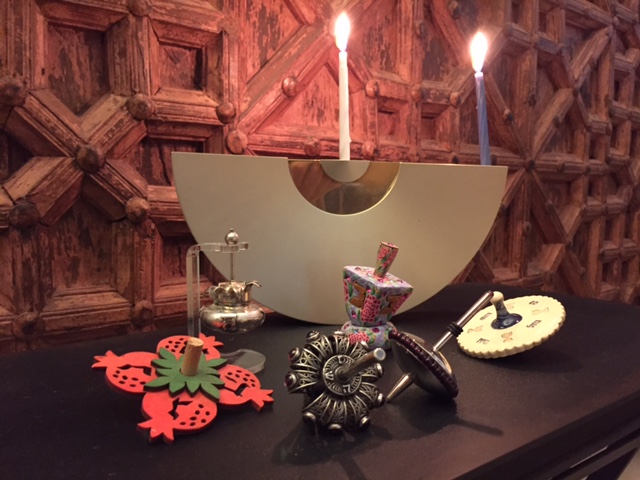
Just know: I can’t quote Amichai Lau-Lavie’s words exactly but they went something like this “I just got off the plane from Tel Aviv and am through customs, having successfully smuggled in 300 dreidels that say: ‘A Great Miracle Happened Here’.” (As opposed to all dreidels outside of Israel that say: A Great Miracle Happened There). Amichai is spiritual leader of Lab/Shul in New York and founder of Storahtelling, My take away from him: Miracles happen everywhere.   They are not confined to one time and one place; they do not rehearse the past for the sake of yesterday; they point at here, this place, this reality. Hanukkah is not about what the Maccabees did 2200 years ago in Modiin and Jerusalem. Hanukkah is now and universal.

I love it and need it. San Bernardino, and the unfolding revelations of people who think that religion gives you permission to build bombs and arsenals of automatic rifles and guns, killing innocent people in the name of God, make the days grow shorter & darker.  Hanukkah announces simply that in the midst of all this bleakness we can find light. Jewish tradition offers it in tops (dreidles) that spin and spin till they fall on one of its four sides, each side a different letter, each side a different insight into the where and how of miracles. Jewish tradition offers it in small multi-colored candles (though I miss the fat orange ones of my youth), lit one flickering candle at a time. Jewish tradition offers it in a story of heroes who would not accept the status quo and a legend of sacred oil in a lamp that shone for eight days and nights surviving against all odds burning brightly till a new supply could be made. From my friends in the Christian tradition who are observing Advent, I sense it is symbolically dark days as well. As they wait for the yearly birth of the baby who becomes for them the embodiment of light and love in the world, they too are lighting candles and counting down to hope.

But hope is not always easy to come by. I hear friends say: “I fear for the world my children and grandchildren are inheriting.” And I don’t dismiss their concern.   But a great miracle can happen here. We need heroes and heroines; we need Maccabees and Apostles; we need spinning tops and sacred legends to give inspiration. My hope is that we can wake up as a nation and choose elected officials who will stand up to the Gun Lobby and enact a sensible gun policy for this country. I know it’s complicated. But it is time to pray for the victims and their loved ones with our deeds; it is time to put an end to this culture of guns. That would be a miracle worthy of eight candles.