Tonight is Shavuot (at least as I am writing). It is the holiday on which we celebrate the first fruits of the Spring harvest and the revelation at Sinai. It is one of the least observed of our holidays even though it is Biblically mandated and has an important message. It reminds us that at our core we are a people with a mission. We are a people who listened and accepted the revolutionary idea that there is meaning to our being beyond the limits of our bodies. Whatever you believe about the narrative in Exodus that recounts the Sinai experience complete with a golden calf and shattered tablets, we have accepted its truth and its commandment: that there is a higher law whether filtered through historical writings or delivered from a Divine Source right into the hands of Moses our teacher.
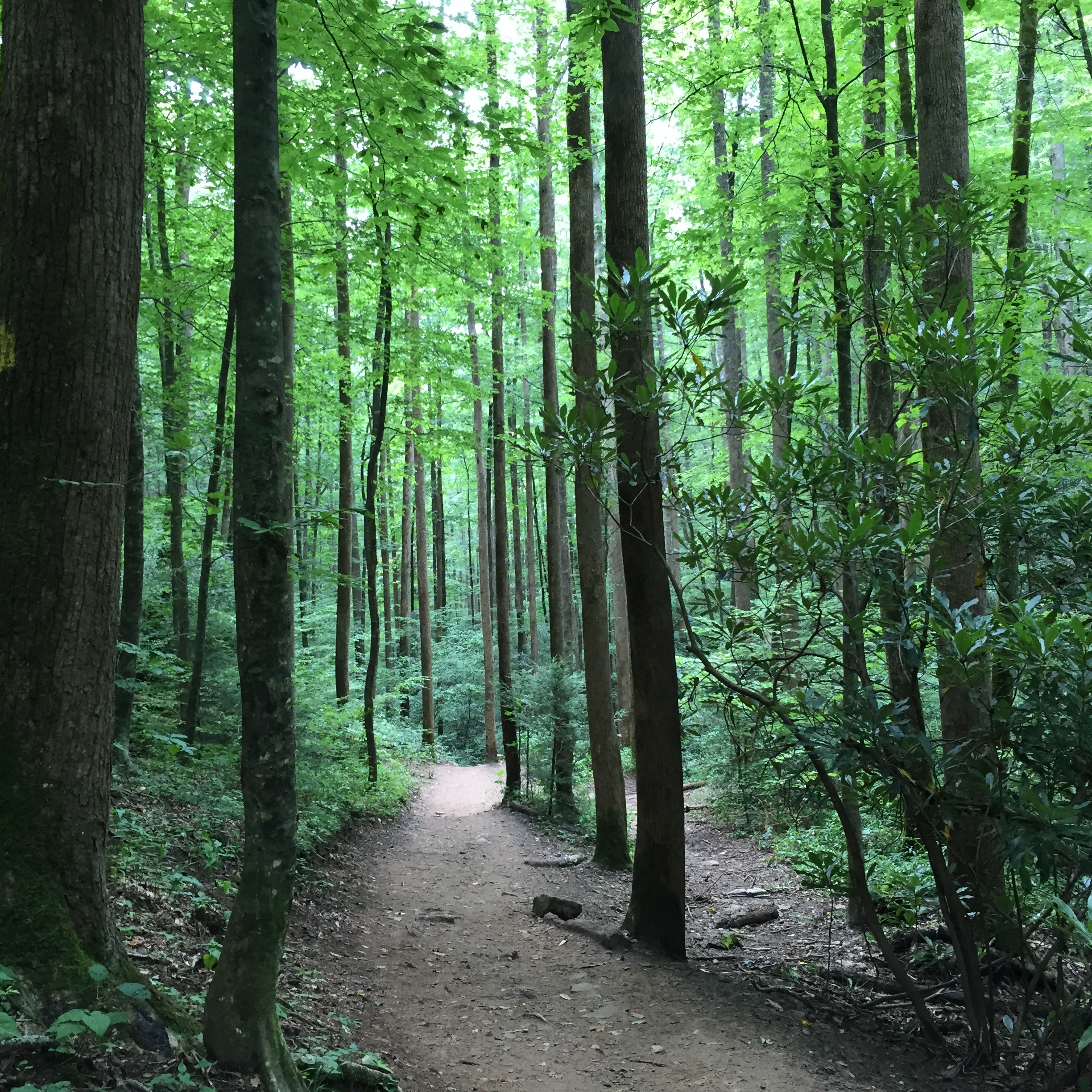
Some people think there is only one way to live the mission: black hats, black coats, covered hair, fidelity to ritual and halacha. I think every individual has the right to find their own way and there are many paths that lead to Sinai. When Tom O’Brien and I taught at FAU Lifelong Learning, we would end our session with a slide with an image of a path in the woods with the words: “Walker there is no road; the road is made by walking.” I don’t remember where we found it, but it has always spoken to me about how we make our way through life by living it with appreciation and purpose. Life is a gift. It might also be an accident but it’s still not to be taken lightly.
The Sinai lesson is that the paths we forge are not for our sole passage but that the generations that came before us and the generations that will come after us are depending on how we walk and where we put our feet. The Shavuot story reminds us that we all stood at Sinai; we all heard the words and accepted the obligations. We are called Israel – the one who struggles with what it means to be human or to put it in traditional language – what God wants from us. And If truth be told, we are having a hard time with it right now. How to defend ourselves and still look ourselves in the mirror, How to stand up to hatred without hating back. How to listen to the voices in our community and nation that we don’t agree with and not write them out of our circles.
You know I am speaking about Israel and her current government. You know I am speaking about the United State and our current administration. You know I am writing this to myself because this holiday we begin tonight says: We can do better.
I’m feeling very nostalgic this Memorial Day. The part of Memorial Day where we are called to remember our war dead. It used to be called Decoration Day and originated a few years after the Civil War ended. One in fifty Americans died in that war and Decoration Day began as a way to respect the sacrifice of those soldiers both North and South with the decoration of their grave sites in 1868. The term Memorial Day grew popular after WW I and became the official name of the holiday in 1967 with the intent of remembering the fallen of all American wars.
There is a part of me that likes the original name of Decoration Day. My mind goes to how do we decorate their memories. What are the terms of respect we can give them? I know they didn’t die for mattress sales. They died because they believed in our country. The values we hopefully all share of freedom for all, dignity and respect for each other, the promise of justice and due process, the pursuit of the right to be our truest selves without government’s dictates.
I happened to have served in one of America’s Wars. The one we call the Vietnam War; the one the Vietnamese call the American War. When Eileen and I visited Vietnam as tourists ten years ago, one of the very impactful places we visited was the American War Museum in Ho Chi Minh City (Saigon). Impactful, instructive and immensely sad – how this war that still makes no sense cost the lives of almost 60,000 Americans and countless Vietnamese and for what. How the government consistently lied to us – yes, the American government and it didn’t matter which political party. These men and women whose graves we decorate this weekend died for the idea of a country we are still struggling to live up to.
Yesterday I went to a street festival in our little town of Brevard, NC. There was blue grass music, food trucks with a lot of smoked meats, cotton candy, funnel cakes and open-air booths with t-shirts, ceramics, jewelry and lots of things we didn’t need. People were walking around with all kinds of outfits and hats – people of all different sizes, shapes, shades. One woman wore a Trump 2028. I sighed (deeply) and reminded myself – they died for her right to wear it – no matter how abhorrent to me.
So how do we remember and how do we decorate? With respect for their sacrifice; with a commitment to the core values of this country no matter what the administration; with a pledge to preserve the promise of our founding words – we are all created equally; we are all deserving to pursue our vision of happiness in whatever form or modality we choose. And it is all about “ we the people…”
So let me remember one – he died when a helicopter was taken down by the Vietcong in the Central Highlands. He was from the Upper Midwest, a JAG officer who befriended me and reminded me of my rights as a Chaplain but that’s another story. He also gave me a gun and told me no matter what the regs said, I should keep it near even if I couldn’t officially carry it. His name lives inside of me as well as his kindness, caring and compassion. His memory is a blessing.
So eat hot dogs; find good sales; but remember, our freedom comes with sacrifice.
It feels like every year there is a new item to add to your Seder plate or a new reading to insert before the second cup or the eating of answering of the four questions or the telling of the story. This year its lemons. Lemons for their color; lemons for their taste; lemons for the hostages sitting still in darkness and wondering if they will ever see the light. I like how the tradition grows and how it adapts. I like that it is not frozen in time or place but that it is living and breathing.
Yes there is an order to the Seder. And I follow it more or less. And the words written centuries ago take on different meanings almost every year it seems. Like the word “enough” – in Dayenu – it would have been enough. Yes. the poem/song lists all the things we have historically experienced as a people from leaving Egypt to discovering Torah and Shabbat, from building the Temple to entering the Land. Any one of them would have been enough. But there’s another way to roughly translate Dayenu. (Hebrew scholars look away!) It is enough. Enough with war; enough with Hamas terrorism; enough days the Hostages have lived in tunnels; enough bombings and death of the innocent both Palestinian and Israeli; enough tariffs, enough ICE, enough presidential privelege and power grabbing; enough shirking of congressional responsibility in leading this country.
The trick in leading a Seder is to balance the ritual, text and free flowing discussion. People sometimes tell me that they went to a “real” Seder where they read the whole Haggadah and even went back after the meal. If I could rewrite the order of things I would put Elijah before hard boiled egg – Elijah is the harbinger of hope and promise – that opening of the door isn’t just to welcome a spirit to sip the wine. that opening of the door is an act of faith that we can make tomorrow better than today.
Of course we’re not doing so good with today. Hence the lemon. The piece I saw says put the lemon on the Seder plate and slice it right before Maror. Add it to your Hillel Sandwich – so the bitterness of slavery and sweetness of freedom are integrated with the sharpness of the hostages’ fates.
At LabShul, one of the out there congregations in our country has a heading on their Seder instructions which I love. SEYDER: Say More/Read Less. So here’s my take: This is all about a discussion. It is not about slavishly following the text. It is reacting and intereacting with the tradition. It is about interrupting the leader. it is about questioning the rituals. It is about lemons, oranges, and olives.
It is almost Thanksgiving. And over this weekend, our immediate family (minus the two on their Honeymoon) will all be together; we will have turkey and my mother’s Ritz cracker stuffing on Thursday and some alternative to turkey for Shabbat dinner on Friday. We will light am extra set of candles for the hostages that remain in darkness and fear. My head is hoping, praying that by some miracle more than 50 will come home; my heart is just broken when I allow the reality of this madness to settle in.
And it is almost Thanksgiving. I almost feel guilty; there are so many blessings that surround me. I have so much I am grateful for. They are the usual: family, friends, bounty, freedom; safety and security; home and hearth; our fractured, imperfect but better than most country, and even a new car. Not everyone has this all; not everyone in our own United States, not everyone for sure in Israel or Gaza. And none of this should be taken for granted.
And it is almost Thanksgiving. When I was in elementary school it was all about the Pilgrims and the Indians. It was about corn and cornucopias and friendship between the Native Americans and the survivors of the Mayflower. We called them Puritans as if they were pure and innocent. It didn’t even dawn on us that the new land they were settling belonged to someone else. But myths are powerful and the story even if flawed contains enduring truth. Like gratitude.
And it is almost Thanksgiving or is it Black Friday. But of course, given our amazing capitalistic system, Black Friday is now a week, a month. And we continue to live, to buy, to celebrate, to count down or up to the “Holidays” and gift giving. I know the gift I would like to give – the gift of sanity to a world gone insane; the gift of wholeness to a world fractured by hatred and war. A friend of mine who is a child of survivors remembers his mother who survived one of the concentration camps saying: “There is real evil in this world. Make no mistake. And it must be confronted and contained.” There is and we saw it on October 7th. There is and we cannot let evil win. We cannot take goodness for granted. And we can’t allow ourselves to become callous to the pain and suffering of all who are hostage to the horrors Hamas unleashed.
But is it almost Thanksgiving. And I am so grateful for all my blessings and with a heavy heart I say: Amen.
It is Yom Kippur morning, and some people probably are thinking what is he doing using the computer. But what do you do in between waking up and heading to Synagogue since if fasting there is no coffee to make and no cereal to pour. I reread my Yizkor Drash (that means short sermon) and decided that even if it needed more editing, it was done. I tried to sleep late but that didn’t work – it never does for me; if I sleep past seven, I must be sick.
And so, I’m thinking about my sins. Don’t worry I am not confessing them to you. (at least not in lurid detail.) What a loaded word, “sin”. Like there is a universal standard; I am more inclined to a sliding scale. In the Yom Kippur liturgy, there is a prayer that lists our sins alphabetically. In that spirit I am going to concentrate only on the “Ses” – is that how you pluralize the letter “S”?
Some of you know me well and won’t be surprised by this litany. You can probably add a few more – feel free – in the spirit of this day, I can take it – I know I don’t know all my shortcomings and maybe that is its own blessing or sin. I am starting with stubborn.
It is hard for me to admit I am wrong, and it is hard for me to ask for advice (or directions). Although and I was going to save this admission for the end the ageing process is making that easier. (Ageing process — I really mean getting older or if I am really confessing here: I really mean getting old. Period.) And I think that everything I cook is delicious and I think that all the words I write are profound and I have a hard time telling Eileen she is right which is probably my biggest mistake on many levels.
I’m also selfish. It’s a silent kind of selfish. I would give my kids and grandchildren anything in my power they asked for (almost). But I am nowhere near as selfless as Eileen who is one of the best gift givers almost to a fault. There’s another sin: Judging her by my artificial standard. But back to selfish. In my retirement I am beginning to like that word – it is ok to think of your own needs and wants as long as it isn’t exclusive to all others. I’m back to sin on a sliding scale.
But enough: It is time to get ready for Judaism’s communal confession – time to get ready for services and find in the ancient prayers contemporary words that will enter my heart. I’ll save the rest of my confessions for the prayer book.
It is Tisha B’Av – the ninth day of the Hebrew month of Av and for many Jews it is a fast day; it is a day of mourning – remembering the destruction of the first and second Temples in Jerusalem and some say the expulsion of the Jews from Spain. Maybe because of its placement in the middle of the summer this is not one of my top ten holidays. Maybe because I have that old Reform theology in my head that asks where would we be if we were still offering animal sacrifices on a centralized altar in Jerusalem. Would we have synagogues; would we have Rabbis; would we recognize ourselves?
But this year Tisha B’Av snuck up on me and said: pay attention. When the Temple was destroyed and Jerusalem laid waste, our national identity was destroyed. The second Jewish commonwealth disappeared and although not erased from history, we began our dispersion, our wandering, our dependence on the tolerance of emperors, monarchs, religious leaders, dictators, and political systems we were not a part of. And so began the slow and tortured march to the Inquisition and the Holocaust.
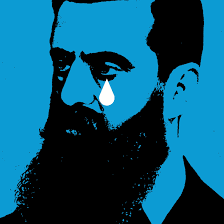
It took us almost 2000 years to regain Jewish sovereignty. When Theodore Herzl championed a national homeland for the Jewish people and created modern political Zionism, he envisioned an open society where Jews of all stripes and colors, all beliefs and cultures could feel at home. You can read about it in his utopian novel, “AltneuLand” (Old-New Land), published in 1902. If you are following the current Israeli political crisis, you know that many observers believe that the crisis concerning the “judicial overhaul” is about Israel’s national identity. Will it continue to be open and innovative, pluralistic, democratic? Will it be the Israel we are so proud of?
Tali texted me yesterday and asked – are we an ethnicity? I don’t know if she was filling out a form or where this came from. (Texts are limited in the amount of information they impart.) But I answered: “Yes, and more. Its complicated.” Well, it is and it isn’t. We are a people; we care about each other; we care what happens to Jews wherever they live. Do we care more than we care about non-Jews in Asia or Africa or Central America? Well language tells a little bit of the story. We divide the world into Jews and non-Jews. We care about people in need everywhere, but we begin by caring about our own.
And so Tisha B’Av. If nothing else, tells the heartbreaking story of Jewish powerlessness. It reminds me how much and why I care about the future of Israel society. I am so proud of the scope of the Israeli protesters who are writing a new chapter in Herzl’s novel. They are fighting for the soul of the nation. They give me hope and that’s not a small thing. I am proud of every step they take in their march from Tel Aviv to Jerusalem, in their willingness to stand up for their ideals. I may be idealizing them and maybe a little naïve, but I think they could teach us a thing or two.
I don’t know about you but every day that I get up in the morning and see the sun rising I know I am blessed. I don’t know about you but every day when I get up in the morning and get out of bed without pain in unexpected places, I feel lucky. I don’t know about you but anytime my nose runs or my throat tickles or I cough I fleetingly ask myself is this COVID. We live in unsettling times. There is almost no such thing as normal. We think we are in control of what will happen tomorrow or the day after and the airlines throw a curve ball, or the weather does a number, or the rapid test shows two lines, and you are screwed.
It’s not that I am in a bad place. Not at all. I am aware how amazing my life is and that I live in interesting times. Not that they are perfect. Not that they aren’t worrisome. Not that sometimes I feel like we are living on the edge of a precipice. And tomorrow is either free fall into an unknown abyss worthy of depiction in a movie about the apocalypse or we are on the border of a new epoch about to soar into horizons we can barely imagine. There are so many things I don’t know.
I don’t know what it felt like to live as a Jew branded with a yellow star or cone or hat in some European ghetto or Middle Eastern Mellah. I don’t know what it felt like to live as a serf on land that was not my own in a time when life was valued by what you could produce and not by who you were. (Although we are not so distant from the same kind of yardstick). I don’t know what it was like to live without antibiotics or modern medicine when a simple cut could end your life. Or maybe I do – maybe we all do. This pandemic has certainly humbled us and taught that the simple act of covering your face can keep you safer. And things we once took for granted like sitting in a theater or dancing the hora (I just came from a beautiful wedding) or dining inside a restaurant can’t be taken for granted. Neither can attending a 4th of July parade.
I don’t even know what there is to say about all these guns. I don’t know why anyone needs semi-automatic weapons. There are no dinosaurs roaming our streets. There are no lions lurking in the tall grasses. There are no marauding masses breaking down the barricades. Most of us live in relative safety. Why the guns, the guns, the guns? The politically correct thing is to applaud the “bipartisan” gun bill just passed. But this is what I know. It is not enough. Not enough. Not enough. And I feel powerless to make effective change. I know: VOTE. I know: SPEAK OUT. I know: GIVE MONEY/TIME. But in the words of the prophet called Pete: “When will they every learn; when will they ever learn?” I don’t know about you but the fireworks didn’t do it for me the other night.
(A note of explanation: A friend called and said, “I will be alone Seder night. I am not comfortable with zoom – can you help me find a way to celebrate.” This is what came up …. A little long for my regular posts …. But here for you to use as you see fit ……
This night is different. Locked down; socially distant; isolated and feeling fearful of the next news cycle; wondering will the “plague” pass over my house and the homes of my loved ones. This night is different. It is hard to think of Seder meaning order when so much that is happening around us seems so random.
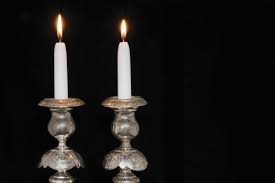
This night is different. The candles we light are festive reminders of faith and hope. I hear my mother blessing with her lips the Hebrew formula of praise and pleading with her heart the motto of her depression: This too shall pass. The flickering flames fight for survival. We need them to win; we need them to brighten the darkness of despair; to lift the veil so that we can see there is a way up and out of this vast and deep valley of desolation.
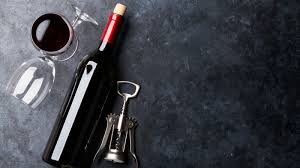
Thank God for wine. Whether red or white or any color in-between, pretend you are a master wine connoisseur, and let it linger in your mouth. Taste the earth, musky and full or dry and acid. There is a miracle on your tongue, the process from seed to bottle. It is worthy of blessing.
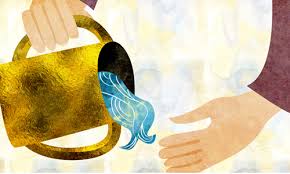
This night we wash. Hands in water in a bowl. In my house I pour from a pitcher and as a blonde and blue-eyed acolyte robed in white and red in a soaring cathedral, I offer my “priest” (the youngest child) the purity of being cleansed. But forget my silly fantasy. Add some soap to defeat the virus. Forget the bowl and pitcher. Wash well and as you lather sing an early Dayenu.
Parsley, peas and peapods, anything that grows green. It is Spring after all. And that means hope dipped in salt water. And that means we will get through this. And that means: Next year in Jerusalem, Paris or even Rome. That means next year in a crowded room, shoulder to shoulder, hot and sweaty, my good clothes itchy against my skin. Next year back too long and boring and when will we eat.
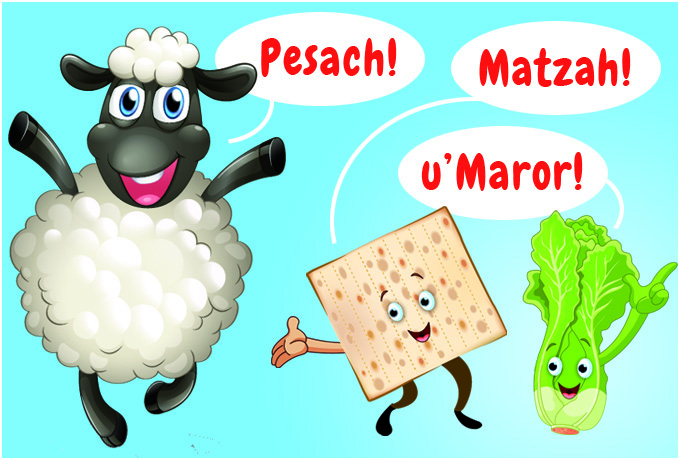
I guess this is turning out to be a different Haggadah or more precisely a different Seder. I don’t think I’ll get to all 14 steps and who has the patience for this anyway. It’s really all about the Matzah and the story that it tells. Rabbi Gamliel is quoted in the Haggadah as saying: “Anyone who has not said the following three things on Pesach has not fulfilled their obligation: the Passover sacrifice, matzah and maror.” So I’m saying them.
Pesach – in ancient times the sacrifice and aroma of roasting lamb. How much has to be sacrificed in order to preserve the miracle of freedom. The willingness to believe that we can be redeemed. That there is a force in the universe we can tap into to light our way and walk the murky path through a sea of reeds to the other side.
Matzah – break it now. Break it into two uneven pieces. (It would be a miracle if it split evenly.) The larger piece gets hidden. Maybe in the folds of your napkin; maybe in the margins of the book; maybe under a pillow; maybe behind a piece of furniture – hidden for a different generation to find. Because the story we tell of Egypt, slavery and the road to redemption is not just the story of us; it is the story of every generation; it is the story of them. I know we call it the bread of affliction but have you ever had matzah slathered with whipped butter and strawberry jam?
Maror – The Bitter herb. How much more do I need to say. It isn’t about denying the bitterness that comes with living. It isn’t about negating how hard it was to be a slave to Pharaoh. It is about recognizing the bitterness and finding a way to make it somewhat sweeter – like dipping the horseradish root into that mixture of apples or dates and nuts or apricots and wine and cinnamon or cardamom to make it bearable. So do you know what lettuce wraps look like in a restaurant: wrap your bitterness with the sweetness of family, friends, love, affection even if you have to do it from memory. Eat the Maror any way that works for you. But I would do it like Hillel used to, sandwiched between two pieces of Matzah, savoring with every bite the sweet and sugary stuff we call LIFE.
OMG! I almost forgot. Have you been sipping the wine? I hope so. The Seder calls for four glasses – each has its own promise. And with each sip we bless the story of liberation that we tell. It is a retelling of ancient truths that we are in this together. That we will find a way out of this together. That we do not tell this story just for us. We tell it to change the world connecting love and loss with life and liberty.
The Haggadah ends with a song about a parent and a goat. In one of my favorite poems, Nathan Alterman brings the song to life as his words help me conclude my Passover story. We are all clinging to the edges of the pages. We are living in the margins. But the strength of Passover is the promise of an open door and a world where plagues are drops of wine and each of us is living unafraid singing about tomorrow.
The Kid of the Haggadah
There in the market place, bleating among the billy goats and nannies, Wagging his thin little tail—as thin as my finger— Stood the Kid—downcast, outcast, the leavings of a poor man’s house, Put up for sale without a bell, without even a ribbon, for just a couple of cents.
Not a single soul in the market paid him any attention, For no one knew—not even the goldsmith, the sheep-shearer— That this lonesome little Kid would enter the Haggadah And his tale of woe become a mighty song.
But Daddy’s face lit up, He walked over to pat the Kid’s forehead—and bought him. And so began one of those songs That people will sing for all history.
The Kid licked Daddy’s hand, Nuzzled him with his wet little nose; And this, my brother, will make the first verse of the song: “One only Kid, one only Kid, that my father bought for two zuzim.”
It was a spring day, and the breezes danced; Young girls winked and giggled, flashed their eyes; While Daddy and the Kid walked into the Haggadah To stand there together—small nose in large hand, large hand on small nose.
To find in the Haggadah— So full already of miracles and marvels— A peaceful place on the last page, Where they can hug each other and cling to the edge of the story.
And this very Haggadah whispers, “Join us…you’re welcome here … you belong, Among my pages full of smoke and blood, Among the great and ancient tales I tell.”
So I know the sea was not split in vain, Deserts not crossed in vain— If at the end of the story stand Daddy and the Kid Looking forward and knowing their turn will come.
She beat me to it. Not that I was asked to write for the NY Times Sunday Review, but I so resonated with Mary Pipher’s piece: “I Love the World, but I Cannot Stay”. Thinking about death and thinking about your own dying is not something we do very often. Although being in the Rabbi business I have seen a lot of end of life scenarios and shared many diverse and personal rituals of passing. They invariably remind me in some unexpected way of my own time in this realm of existence and when or how it will end.
The coronavirus has not helped. The media reports that the virus is especially lethal to our elderly and those with underlying medical conditions. No matter what my heart and spirit say – one of those is me. I read every article about how to protect yourself. I am washing my hands many more times a day. I am trying not to touch my face but even just writing these words makes my nose itch. And I want in Pipher’s words: “to die young as late as possible.” But it’s not in my control no matter how much hand sanitizer I rub into my hands.
It brings me to Purim, our holiday of the month. Esther is waiting in the wings to appear in the King’s bedroom. Mordechai is watching and observing how the virus of hatred and prejudice is spreading in the ante chambers of Haman’s mind. Ahasuerus is oblivious just wanting to keep the party going enjoying the trappings of power. And God is hinting that we better work this out amongst ourselves since HE/SHE is silent throughout the book.
And it is not quite a pandemic as we hold our breaths to see what and where the Coronavirus will do with itself and how it will infiltrate our lives as we go from supermarket to pharmacy to see if there has been a delivery of Purell. Yesterday I was in a meeting where we were planning a community gathering for a month from now and we knew out loud that the public aspect of the assembly was at risk since no one knew what the future held.
Of course, even before we had ever heard of the term Coronavirus, no one knew what the future held. Life is really about that even if we aren’t ready to admit it. Existentially every step is precarious, and every handshake exchange is more than a willingness to be open and extend good wishes of peace and harmony. Even before the virus emerged to place our finitude and fear at the center of our daily story, we transferred our own genetic material to each other with barely a touch.
The struggle for me is to find balance and act appropriately caring for myself and others. A friend of mine reminded me that in the Mussar world it is “equanimity” that we need. In Hebrew the term is “Menuchat Hanefesh” and it translates loosely as “rest for the soul” or “tranquility”. But here is the thing about the Mussar teachers: it is not a passive soul trait. It is not wait and see. It is not blind trust and leaving it all in the hands of God. It is balance. Finding your way through these corridors of confusion and living with both joy and appropriate caution. Finding a place for your anxiety and channeling it to proper safeguards. Finding the courage to be and not letting fear paralyze.
It is amazing how something so small that you cannot see with your naked eye can be such a large test for our society. The days and weeks ahead will tell us if we fail or succeed. And success is not just about a vaccine or cure. Success is government working in the interest of the people. Success is all of us caring compassionately for each other. Success is love is love is love.
It is a good day to try to write. Morning has broken but the skies show no sign that there is sun lurking behind the cloud cover. The clay tiles of the roofs across the street are outlined against a grey that is of no particular color or interest. Everything is still on this Memorial Day 2018, except my memories.
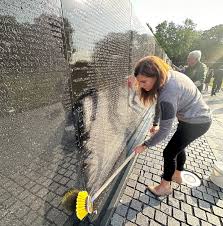
Maybe the article in my “inbox” from The Forward propels them this morning. Reposted from Veterans Day two years ago, “Profiles Of Our Fallen” obits 37 Jewish men and women who died defending you and me over these past ten years. The image accompanying it is of hands gloved in white folding an American flag horizontally cuffed with the blue sleeves of a US Army dress uniform. I know those sleeves with the gold braid. They take me back to my responsibility as the Jewish Chaplain of Arlington National Cemetery when I served full time duty at Fort Belvoir in Virginia. That was the year before I was posted to Vietnam.
It was a strange and disturbing time. The beauty of a military funeral with its elaborate rites and rules played out against the rolling green and white of Arlington. So many stone markers standing at attention quietly witnessing the tragic sacrifice of what could have been and of what we will never know. I played my part, proudly. It was the least I could do for those who will never know another tomorrow. I played my part, religiously, not one hundred percent sure, event then, what the ancient words consummated. This I knew. If almost nothing could heal, at least these Hebrew formulas bound memory to eternity and offered a glimpse of a blue sky that seemingly goes on forever.
They weren’t all killed in action; they weren’t all too young to die. Some were career officers who died what we call a natural death. But too many were. Standing at an open grave you know many things. You know this could be you. You know this will be you. You know that for all we think we are, we are but dust and ashes, grass that grows and withers, a faded flower in the wind.
We owe so much to all of them. There is almost nothing we can give them to repay the debt, except perhaps: A life well lived, a life of caring; a life infused with giving; a life of service to the causes they died for. I ask one minute of your time today or tomorrow or whenever you read this. No matter what your challenges, you are blessed to be living in a country that still cherishes your right to choose how you will live your days. Think of them and remember.
In my head, the bugler is playing taps. They died for our freedom. It is that simple and that complicated. We owe them this country.
Passover and Easter kiss each other this weekend. Friday is Good Friday and as the sun sets Jews begin to ask the questions of the first Seder. Easter is Sunday and the second day of Passover. I like it. I like when the calendar underscores that our spiritual traditions have the potential to unite us and join us in common cause even if we walk the path with different shoes, clothes, rituals and images. It may be “chutzpah” for me to assume your image but go with me for a minute.
For Jews it is the broken piece of Matzah held high for all to see; for Christians it is the broken body of Jesus on the cross. For Jews it is the hidden piece of Matzah to be found and redeemed before we can continue on our freedom journey; for Christians the body of Jesus hidden in a cave and found risen promising new life. Both are promises; both are challenges; both are opportunities; both revolutionary. Last Friday night Rabbi Olshein quoted the powerful and poetic teaching of Rabbi Abraham Joshua Heschel underscoring this concept: “Prayer is meaningless unless it is subversive, unless it seeks to overthrow and to ruin the pyramids of callousness, hatred, opportunism and falsehood.”
For me, this year especially both holidays share a challenge. Coming one week after the Student Marches our ritual celebrations ask us to remove the symbols from their ancient husks masquerading as holy and ask our own four questions or five or three, whatever number resonates with you. I will ask:
Why is this moment on the American political scene different from other moments? Because the children are leading us, because the future is calling us, because we now know it is time to stand up.
What is so bitter to us and so salty we cannot enjoy our meal as usual? 17 deaths are bitter to us; our tears are salty as they run down our cheeks. 17 deaths weigh heavy on us, not to minimize the deaths of Las Vegas, Orlando, Sandy Hook, do I have to go on? Do I have to keep on counting? Because it is not enough to dip our parsley in salt water and think we have fulfilled the commandment. The commandment calls on us to exercise our freedom, to act on our commitments, not to let the status quo of a government enslaved to the gun lobbies to continue to sacrifice our children on the altars of their apathy.
What is enough? Enough passivity, it is not enough to think the other “guy” can do it. Enough of lethargy, it is up to you and me to make the change; it is up to you and me to leave Egypt and walk across the sand and the sea to a safer and fairer tomorrow. When you break the middle Matzah – listen to the sound. You have to listen hard it is faint but telling. It echoes that it is time to put our society back together. It is time to make government align with the needs of its citizens. “Let all who are hungry come and eat; let all who are in need celebrate America with us.
In the Christian metaphor: Jesus has risen. Let us rise; let us break the shackles of indifference. Jesus has risen. Let us rise; let us hold the cup of Elijah high promising a new dawn and a new day for all of us. Let us rise; let us tear down the pyramids and build a just and uniquely American society for all to see.
Happy Holy Days everyone, may they bring us closer to a land that fulfills its promise to a time when the Messiah lives next door.







 It is a good day to try to write. Morning has broken but the skies show no sign that there is sun lurking behind the cloud cover. The clay tiles of the roofs across the street are outlined against a grey that is of no particular color or interest. Everything is still on this Memorial Day 2018, except my memories.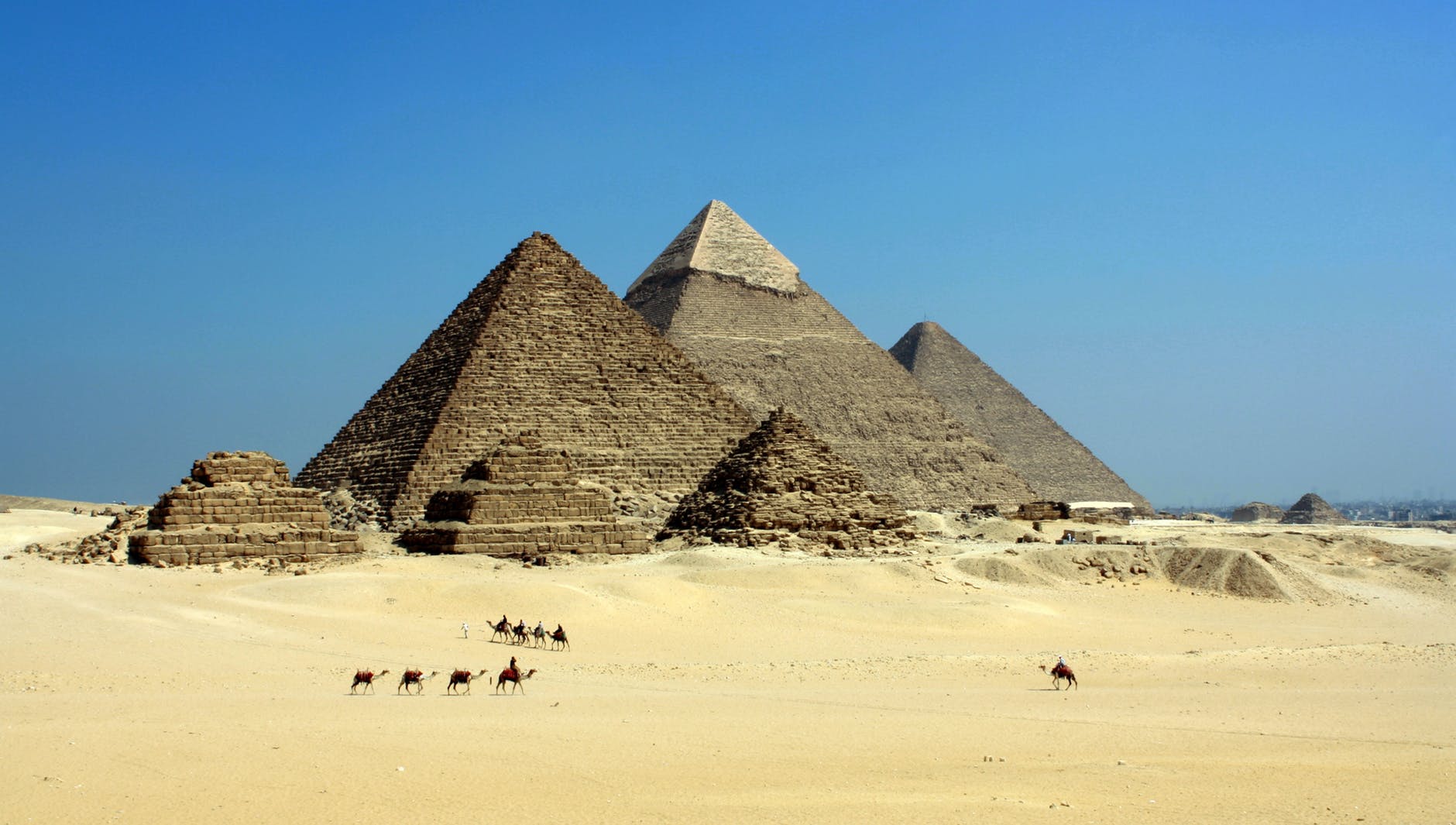
 rabbiunplugged