That’s How The Light Gets In

leonard-cohen

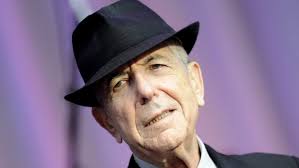
I am not a music critic; I am not a poet. I feel totally inadequate to the task but I also feel compelled, obligated. I owe it to Leonard Cohen. His music has touched me so deeply and so often. So this will be from the heart but if you want a really complete and savvy commentary on Leonard Cohen try the professionals at Rolling Stone or your favorite source.

His words and music found a way into a deep part of me, even when I didn’t understand all the lyrics. But I could feel the pain; I could touch the sadness even the occasional despair. Lots of people describe his music as dark; I won’t argue. But I find an honesty there that resonates with me. It is an honesty that speaks about the limits we all struggle with: time that is finite; joy that is always incomplete no matter how satisfying and filling; longing, yearning never fully realized.

And yet I believe he lived his life abundantly and copiously, never afraid to search for more, for spiritual truth, for the physicality of love in Chelsea hotels and famous blue raincoats. I envy the courage to walk, run, crawl, climb whatever path opens before you. Conventions be dammed. Expectations be trashed. Bring it on.

I love how he fused his Judaism with his world and his work. No pandering or pampering, you had to work to get it. So many of his songs a midrash on Biblical themes, heroes and villains. I think of him as a true “cohen” – a descendant of ancient priests, a grandson of Rabbis. He stands on the generations that went before him: outstretched hands, fingers formed in blessing, shrouded by a prayer shawl of Hallelujah choruses, too powerful to look at, too holy to touch. I think life was like that for him.

For one of my birthdays, Eileen took me to his concert in Vegas and arranged for him to send me an autographed copy of his newest collection of poetry, “Book of Longing”.   It gives you a good sense of who he was and is (for me). Try this on

“Anyone who says

I’m not a Jew

Is not a Jew

I’m very sorry

But this decision

Is final.”

So filled with contradictions, so flawed, so stretching for perfection, so inventing and reinventing himself, his art, his music, his words, he lived profusely. That brings comfort and allows me to image him now in the light, for in his words: Ring the bells that still can ring. Forget your perfect offering. There is a crack in everything. That’s how the light gets in.


One No Trump

one no trump

There was a great article by Nicholas Kristof in the Sunday Times a week ago. It is called “A Confession of Liberal Intolerance”. He writes about us liberals, and talks about how willing we are to listen to all kinds of points of view, want to bring everyone to the table, no matter what their color, gender identity, national origin, faith, culture, unless they are conservatives, and especially conservative (read Evangelical) Christians.

It resonated with me in this political season. I mean we were so concerned with the rhetoric of the Republican Right and we along with practically everyone in the Media so underestimated Donald that we couldn’t believe that we would wind up with him as the “presumptive nominee”. I secretly believe that somehow the Republican Party will come to their senses and there will be a miracle in Cleveland. I have so far declined to sign my name to a “Rabbis Against Trump” movement saying to myself, it is too early, too soon, this too shall pass.

I also fantasize that Mr. Trump will stop the act and show us that he is more than a great showman and the best barker in the circus. He will become Presidential as they say and address the real issues facing this country without resorting to name calling and hitting people in their under bellies. I would like to be faced with ideas that challenge me even if I can’t agree. I think Kristof’s point that we learn from those who challenge our assumptions and beliefs is right on target. There is nothing wrong with an honest argument. I would like to know more about how we effectively control the immigration issues without a wall and who will pay for it. I am curious how his policies would grow the economy, raise the standard of living, put people back to work, make America great again, cut taxes and keep businesses from fleeing our shores.

I would like to be faced with one of the fundamental challenges the Rabbis faced when compiling the Talmud. What do you do when people disagree; when principles clash; when all parties believe that they are right and their reading of what is right for America is the one and only position to take seriously? You look at motives; you examine the core; you seek out basic truths. The Rabbis taught: “Kol Machloket…. Every argument for the sake of Heaven will in the end be of permanent value, but every disagreement not for the sake of Heaven will not endure.” They tell us it is ok to disagree; it is ok to have your principles challenged. We learn that way.

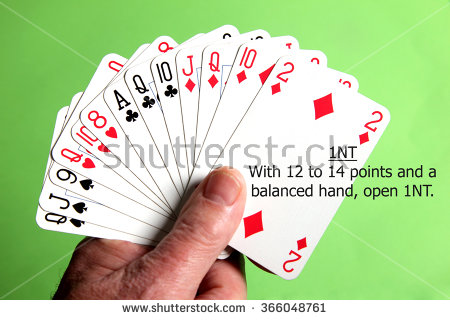
Eileen and I play bridge with friends – one of whom is way more bridge savvy than the rest of us.   She says that one no trump is the hardest contract to make. The cards are usually fairly evenly divided and no one has said very much so it is hard to even guess who has the strong cards and what is in each player’s hands.

Not a good way to pick a president.

Babka Is Back

babka_duo_index1a

I don’t usually do this but to “get” this blog you might like to go back a few months to the blog of January 17th titled, “Is It Good Enough?” It was about these blue cards I found that date back to the 70’s – sermons – typed – like on a typewriter – and filed away, forgotten till now.

I was reluctant to read them, not knowing what I would find: Were they good; have I grown; did I bring insight and meaning to my listeners? They are my “chameitz” – the yeast that causes the dough to rise. Passover is over but all that attention to labels and order freed me from the power of the past to bubble up and control me. Passover worked for me; it gave me the ability to start again knowing the doubts and sense of inadequacy would be back, but that’s why we play this Seder game year after year.

So the genie is out of the box. I’ve opened the files and on a beautiful Florida day, I schlepped them outside and sat in the sun reading my past. It helped that our granddaughter, Sammy, was sitting next to me. So here are a few reflections.

They are mostly High Holy Day Sermons and they are mostly too long. I think I love my words too  much and find it hard to hit the delete button. But they are interesting in ways that surprise me. Themes reoccur: I talk a lot about my self and what I am struggling with (as a parent, a teacher, a believer, a skeptic). I talk a lot about Israel; it is fascinating to see  how that conversation has changed over the years.

There are some good stories that I have forgotten and can probably use again. Like: “When a Yeshiva student came to his Rebbe and boasted that he had gone through the Talmud five times, the Rebbe turned and asked: ‘And how many times has the Talmud gone through you?’” It leads me to ask: How much have these words gone through me?

My eyes were better then. I can’t believe the size of the typewriter font. But was my vision? I’m impressed that even then when Israel’s survival was sometimes in doubt, I thought out loud “survival can not be enough. We cannot be dependent on our enemies to define us.” Why be Jewish is not a rhetorical question; it touches the heart and the soul of each of us.

Forty years ago, in 5736, (I dated my files by the Jewish year), I announced, “Babka is back” and in 5776 its back again. According to the Today show it is here to replace the cronut as the latest pastry obsession. Everything is cyclical or as we use to say in New Jersey: “What goes around comes around”. But that has a somewhat different connotation and usually involved a little bit of self-satisfying glee. It is good to be right. Which brings me to an ending. I wasn’t always good. I wasn’t always smart. But I tried and sweated out every word. I tried to reach beyond the lectern. I laughed when I read one of my sermon openings: “Relax – let down your defenses – I am not here to yell at you. I am here to search with you.”  Yes – for leaven, for yeast, for anything that can help us rise above ourselves.

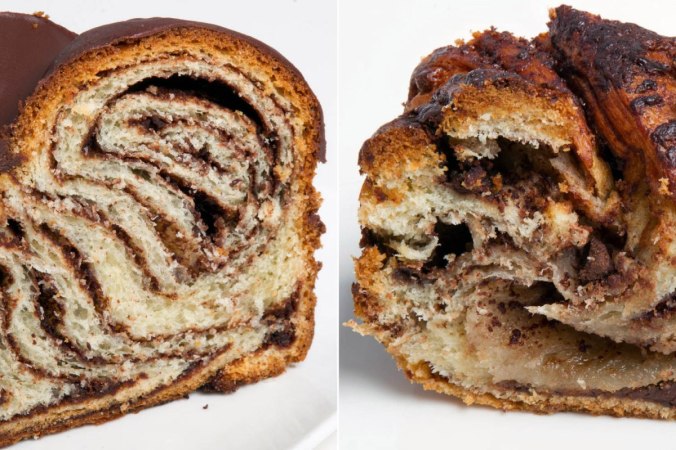
And by the way or to the point:  where is there good Babka in South Florida (chocolate – the deep dark rich kind that doesn’t crumble when you cut it, that can be toasted and spread with butter.)?  OMG, I’m in trouble.


God Thoughts

flower windI just read three stunning sentences. They made me stop and reflect on how they are calling to me. They are from a book that my friend and co-teacher Tom O’Brien recommended. We were preparing for our class (God, Politics and Culture) at Florida Atlantic University’s Life Long Learning Society and we were talking about “The Problem of God”.
We were asking, what does the word, God, mean? The problem is when people proudly say; ‘I don’t believe in God”, something inside me wants to respond and sometimes does: “Which God do you not believe in?” More often than not, I don’t believe in that God either.

The book is called, “A God That Could Be Real” by Nancy Ellen Abrams. Here are the sentences: “Has something terrible ever happened to you or to someone you love? God had nothing to do with it; God doesn’t control events. God influences how we see the events and interpret them.”

Maybe out of context they are not as stunning as I thought they were. But this is what they said to me. This world is hanging on by a thread. There is so much violence, anger and terror. Perfectly innocent people get killed at a moment’s notice as they fly home from snorkeling in the Red Sea, as they walk near a mall in Beirut, as they wait for AAA by the side of their car in Florida, as they sit in a classroom in their University, as they attend a concert in Paris, because they are black, because they are white, because they are women, because their gender identification calls them to dress differently, or for no good or bad reason at all. And it is not God’s fault. “God has nothing to do with it.”

So what does God do if God doesn’t hang out there in the universe moving people, clouds and planets? And why is it important anyway? Because people are getting killed in God’s name (again); because people are using what they call religion to justify evil behavior (again); because people and politicians find that the God word is a convenient excuse to bully people into believing that there is only one path forward for America, one way to make America great (again).

I recently heard Rabbi Donniel Hartman speak about his new book, “Putting God Second”. I love the title. It is a great metaphor almost like theological poetry. I hope this isn’t blasphemy but for me, that’s where God “resides” – behind us motivating and inspiring us to put people front and first. The image in my head is from Genesis when the “wind” of God is hovering over the surface of the waters. I see the water rippling and God is pushing it so the dry land may appear. I feel God separating light from darkness so there can be daylight.

God is behind the scenes inspiring me to be the best I can be so that the world around me is more compassionate, kind and caring. And one more thing: God can only work through us. Our actions, our love, the way we walk through this world and navigate with the people around us, all of the above, allow God to “be”.

It is early morning; the house is quiet; the traffic hasn’t hit its peak; I can hear the birds singing outside. I wonder if they feel the wind of God lifting their wings, pushing at their backs also.

Life Asks Us Questions

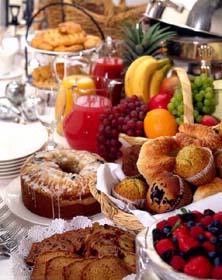
BrunchI was at a brunch last Sunday that celebrated the 25th anniversary of an organization founded by child survivors of the Holocaust. It was filled with people and food, memories and determination, laughter and love, persistence, perseverance, pride. Twenty-five years since they came together finding meaning and comfort in being among their own. Twenty-five years since they banded and bonded to tell their stories to whoever would listen, to be living witnesses to words that are too often just paragraphs in history books, to teach the multiple lessons this horror had taught them.
They call themselves: The Child Survivors/Hidden Children of the Holocaust.

For their definition a child survivor is simply one who was a child during the Nazi years of planned extermination of the Jews of Europe. They lived in any number of settings from concentration camps to forests, from attics to cellars. Some were hidden by righteous gentiles, some hid themselves in places we can’t even imagine, all survived by a miracle that is theologically unsound. Depending who you ask, it was luck; it was God. This they do know: “Anachnu Po – We are here”, the first words spoken even before the blessing over the bread, opening the buffet. This they do know: they are dedicated to the memory of the six million Jews murdered by the Nazis, one and a half million of them children. This they do know: they are committed to telling their stories so that the listener will know: “all people deserve to live in peace and in safety”. (their own words).

Steven Hayes, developer of Acceptance and Commitment Therapy opens a Ted Talk, I recently watched with these words: “Life asks us questions. And probably one of the most important questions it asks is what are you going to do about your difficult thoughts and feelings …” Here is how I filtered his words. We make a choice in how we respond to what life throws at us – not necessarily an easy one, but a choice nonetheless. For me this coming together was all about choosing life. Choosing to live even after life itself had been vicious and cruel. Choosing to live even though all that you loved was ripped away, torn apart and burned.

The tables were round and they were full. The woman sitting to the left of me was not a child Survivor. She was born in a DP (Displaced Person) camp set up after the concentration camps were “opened”. It was an act of defiance and faith to have children at that moment in time. It meant you would not give Hitler any semblance of victory. And children point you forward towards the future, towards new life, new love. (Full disclosure, I know to use the terminology “opened” and not “liberated” because the person to the right of me was my wife, Eileen, former Holocaust Program Planner for Palm Beach County Schools. She taught me that the first concentration camps were actually stumbled upon and not knowingly liberated. (Let’s remember history as accurately as we can.)

It is several days since I digested (both figuratively and literally) the speeches, the songs, the dancing, the food, the joy. I am holding on to it. The author of Proverbs wrote, the human spirit is the lamp of God. I found a tremendous spirit at that brunch. Does that mean I also found God?


My New Favorite Word

Screen Shot 2015-12-22 at 1.54.14 PM

I was at the Dermatologist last week and was told that the bite on my leg that would not go away or stop itching was not from a tick and I didn’t have lime disease. But you never know what detritus the insect that bit me left behind and how the body reacts to it. Context told me what the word, detritus, meant but truth is it is not in my everyday vocabulary. This morning it popped up again on my ipad as I was reading this Danish mystery trying to get a sweat going on the elliptical machine. The inspector seeking to interview a person of interest in a long unsolved murder noticed all the detritus on the front lawn: an old and rusty bicycle; over worn lawn furniture; scraps of life now discarded and left to decay and be transformed. Of course the novel was written in Danish, so I guess it is the translator who chose the word.

Nevertheless, detritus is my new favorite word. Webster defines the word as loose material resulting from disintegration, especially organic; miscellaneous remnants. So I can think about the detritus of my physical being – all that dry skin just flaking off and floating into nowhere. (There is a dermatology theme going on here.) Or the detritus of my relationships – all those people who have sifted through my life and now are somewhere long out of sight (but not memory). Or the things I have done both positive and negative the effects of which are out there still rippling in the spiritual cosmos.

I believe that. Everything we do has consequences, some barely perceptible in the here and now, deeds and acts that change the very space we occupy and imperceptibly but assuredly modify what the future will look like. For most of us it is a subtle and delicate process. But I think how I interacted with the server at Cheesecake last night impacts both of us. I think my decision not to have the salted caramel cheesecake was a good one even beyond the calorie/cholesterol debate happening in my head. I think that the driver of the car I let get out of his clogged lane of traffic and into mine that was somewhat clear and would probably make the light will feel differently about himself and humanity in general at least for an instant. I think, well actually hope, that what I decide to write in this blog impacts some of you (me included) and transforms even if for a moment the way we look at the world and our place in it.

I think I should save this blog until closer to New Year’s but there is always something that is left over, unfinished, or unwrapped, laying out in the yard, patiently waiting for resolution. That is part and parcel of the message of this season: picking up the pieces, keeping your spiritual footprint pointed in the right direction, trailing blessings as you move through your day. It is the lights, the candles, the music, the parties, the presents, the stories, the preparation, the food, the friends and even family, and it is hope and it is faith.   Hope that we can find a way towards healing this fractured world; faith that we can clean up the detritus of the past and move forward each of us owning what we have left behind.


A Miracle Worthy of Eight Candles

IMG_4226II lost the email and I have no idea where it went. It’s not in trash; it’s not minimized; it’s just gone, disappeared. All I did was glance at the heading and beginning of it but I loved how it began. I am totally frustrated by my ineptness but that’s a different story for a different time.
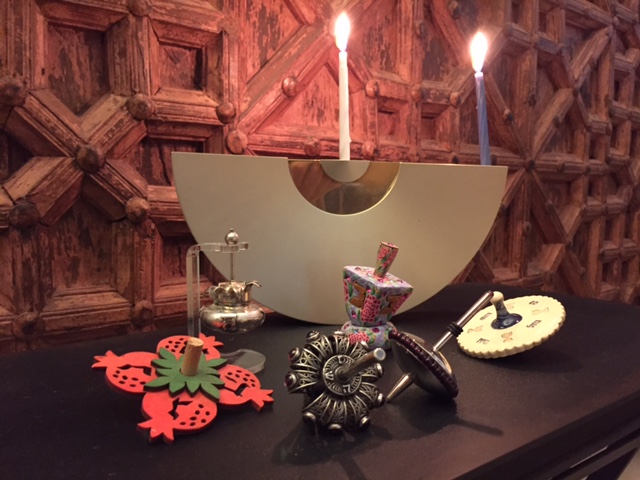
Just know: I can’t quote Amichai Lau-Lavie’s words exactly but they went something like this “I just got off the plane from Tel Aviv and am through customs, having successfully smuggled in 300 dreidels that say: ‘A Great Miracle Happened Here’.” (As opposed to all dreidels outside of Israel that say: A Great Miracle Happened There). Amichai is spiritual leader of Lab/Shul in New York and founder of Storahtelling, My take away from him: Miracles happen everywhere.   They are not confined to one time and one place; they do not rehearse the past for the sake of yesterday; they point at here, this place, this reality. Hanukkah is not about what the Maccabees did 2200 years ago in Modiin and Jerusalem. Hanukkah is now and universal.

I love it and need it. San Bernardino, and the unfolding revelations of people who think that religion gives you permission to build bombs and arsenals of automatic rifles and guns, killing innocent people in the name of God, make the days grow shorter & darker.  Hanukkah announces simply that in the midst of all this bleakness we can find light. Jewish tradition offers it in tops (dreidles) that spin and spin till they fall on one of its four sides, each side a different letter, each side a different insight into the where and how of miracles. Jewish tradition offers it in small multi-colored candles (though I miss the fat orange ones of my youth), lit one flickering candle at a time. Jewish tradition offers it in a story of heroes who would not accept the status quo and a legend of sacred oil in a lamp that shone for eight days and nights surviving against all odds burning brightly till a new supply could be made. From my friends in the Christian tradition who are observing Advent, I sense it is symbolically dark days as well. As they wait for the yearly birth of the baby who becomes for them the embodiment of light and love in the world, they too are lighting candles and counting down to hope.

But hope is not always easy to come by. I hear friends say: “I fear for the world my children and grandchildren are inheriting.” And I don’t dismiss their concern.   But a great miracle can happen here. We need heroes and heroines; we need Maccabees and Apostles; we need spinning tops and sacred legends to give inspiration. My hope is that we can wake up as a nation and choose elected officials who will stand up to the Gun Lobby and enact a sensible gun policy for this country. I know it’s complicated. But it is time to pray for the victims and their loved ones with our deeds; it is time to put an end to this culture of guns. That would be a miracle worthy of eight candles.

Which Brings Us To This Season

IMG_4041

Not Just For the Golfers Among Us

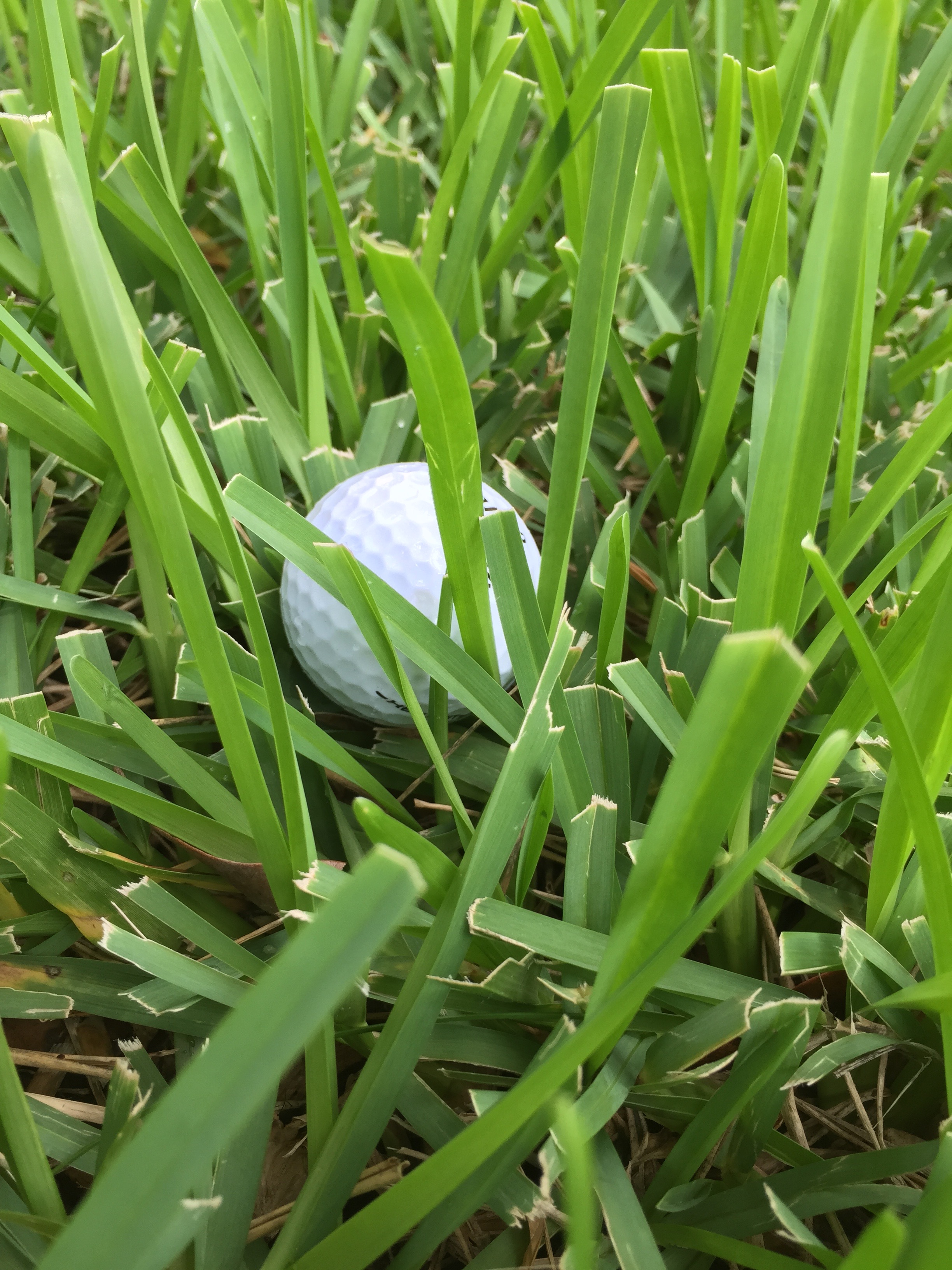
I was in the deep grass, pretty far from the hole. It was a par 5 and it was a good drive for me. I knew I could get to the green in 3 if I just made this second shot count. I took out a long club and took a practice swing. The grass was thick and sticky but I knew I could power through it. If you are a golfer, you know the end of this story. If not, let me tell you it wasn’t pretty. The grass caught my club; the ball veered off to the right and practically went nowhere.

Greedy is what I said out loud – I can’t write what I said inside. But the more I thought about it, “greed” was the wrong word.   I think it was hubris, loosely defined as the belief that I am invincible and can do almost anything I want or set my mind to. I should have picked a different club, one that was more forgiving but didn’t get the distance I was reaching for. I should have listened to my inner self and played it smart rather than macho. I should have learned from the last time I was in the same place.

I have a tendency to keep repeating the same mistakes, not just in golf, but also in life, in relationships, in love. The grass was calling out to me and trying to teach me: learn from your past; choose a different club and stay down, stay focused. The hybrid in your bag is called “forgiving” for a reason. Which brings us to this season and the New Year that begins with the shrill and broken sounds of the Shofar.

Traditionally the ram’s horn plays four notes: one is fierce; one broken; one triumphant, one long. Each note touches a different part of my soul. The fierce tekiah opens me up for the potential being birthed by the New Year. The broken shevarim wails and speaks to me about missed opportunities for wholeness. The triumphant staccato notes of teruah declare you can do it – you can take all the fragmented pieces of your past and glue them together. The very act of trying is itself holy.

It’s all about the effort and the club you choose from your bag. Pick one that is forgiving. Swing smooth and steady and let the club do the work. Listen to the sound of tekiah gedolah (the great and long note of promise). It reaches deep inside of me; reverberating, resonating, and repeating. Trust yourself; have faith. No matter how deep the grass, how dark the day, how heavy the task, the Shofar promises: This is a new start; this is a new chance; this is a new year. Enjoy it and use it well. Happy 5776

Standing Tall

IMG_3998

My mother and father were just about the same height, but somehow she always seemed taller. Maybe it was the shoes or maybe the way she carried herself in a proud but not superior Boston kind of manner. Or maybe the cigar, which was a horizontal point of reference, either in his hand or mouth, moderated his stature so it appeared that he was shorter.

I don’t think it ever bothered him. Generally, he was easy going, giving, happy and hard working, always trying to do more for his family. Charlie, with a broad “A”, almost no “R”, was a good person who struggled with his own successes and disappointments. He was a pharmacist and a sales rep for a pharmaceutical company, with a drugstore in the trunk of his car always full of samples. There was no Medicare Part D or Drug plans then, but there was Charlie with an open hand and heart. But when he perceived that people took advantage of him, or something went wrong in the house that neither my sisters nor I understood, you could feel the stillness and almost see the anger. It wasn’t like a match that flares and goes out; it was this steady kind of burn, the water in the pot just at the point of boiling over.

I feel guilty even writing this but I think he had a hard time letting go of the hurt, but then again, what do I really know of what transpired right before the flame was lit. This I do know: I have my own issues with forgiveness. I have my own challenges to work through and overcome. I somehow find it easy to shut down and retreat into silence when I am hurting. I own it and there is no blame or finger pointing here. We all have different modalities in our arsenal of coping and we are constantly learning and relearning them in every situation.

Enter Selichot, the prayers of forgiveness that whisper hope and renewal to me. Enter Selichot announcing a New Year is coming; a new time for me to begin again; a moment of growth and promise. Enter Selichot initiating a process of review and assessment for those who stop, look and listen. The liturgy, the music, the colors, the sounds gently surround me with compassion and concern. I need Selichot; I need a mechanism that invites me to face how I deal with the injuries I have felt and the hurts I have inflicted. I need Selichot; I want to enter the New Year fresh and rejuvenated. I want to enter it forgiving and forgiven. I love that our tradition gives me a chance to get it right and make it better by facing my own personal failings. I love the time worn words of our liturgy that are consistently pumping out ways to reflect and view a different image in the water.

When those “Al Chets -For the Sins we have committed” jump out of the prayer book, I’m there. Sometimes they are listed in alphabetic order; always in the plural. The sages understood that we are all in this together and no matter how individual our failings may be; it is human to fall and get up, to stumble and stand tall. “Arrogance, bigotry, cynicism, deceit,” I often don’t make it past “A”. The samples in my father’s trunk healed and restored. The samples in mine are the regrets, the hurts, the disappointments, the missed opportunities, the challenges I haven’t met, the words spoken without thinking, the self absorption that comes so easily, giving with not so invisible strings attached or giving grudgingly; taking eagerly. I could go on; in the quiet of the night, I’m good at listing all the ways I have disappointed others and myself.

But this is what Selichot says to me. Consider your deeds; reflect on who you are and who you wish to be; ask for forgiveness and whatever you mean by the word God will pick you up, clean you, brush you off and set you on a new course. It is work like all prayer, but it is worth it. Refreshed, renewed, ready for the broken call of the shofar to proclaim a New Year and another opportunity for wholeness.

(This post was originally published on Ten Minutes of Torah http://reformJudaism.org)