420

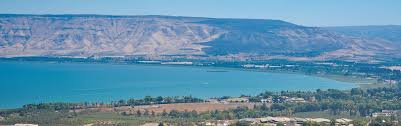
We should be in Israel today. Somewhere in the Galilee either on a boat sailing across Lake Kineret or eating St. Peter’s Fish in a restaurant on the shore. Instead, like many of us, I don’t even know what day it is. On Monday, one of my grandchildren texted me it was National Weed Day. So, given that I have so much to fill up my days, I decided to look it up. Is April 20th really National Weed Day and if so, how did it get that way?

According to CNN, quoting as a source, the curator of the Marijuana Museum in Oakland, CA, there are several different interpretations of its origins. The one they like the best uses the numerical equivalent of the date 4/20. It seems that a group of high school students at San Rafael High School in Marin County used to meet at 4:20 after school under the statue of Louis Pasteur to get high every day. It was a perfect time. School was over for the day and their parents weren’t home yet. The time became a code for them, and it slowly spread across California becoming eventually the number of the California Senate Bill that established the Medical Marijuana program in the state. Who knew and this is facetious but how come my grandchild did?

That night as the sun set it was Yom HaShoah – Holocaust Remembrance Day. If we were in Israel, the plans were that like many in Israel, we would wait for the siren and get off the bus, standing quietly, reflectively, inwardly allowing the sound to pierce our sadness as we remembered 6 million. How efficient the Nazi killing machine and how impotent or callous the world to stop it. But we’re not. We are home like you, sheltered in place, washing our hands, concerned about microbes we cannot see and wondering where we go from here and what tomorrow will look like.

Well tomorrow was Earth Day (which is today), the 50th anniversary. 4/22. I know I am having a hard time with it all. I also know that I am relatively doing fine with it all. (not Earth Day – the isolation – the quarantine – the social distancing). Whatever we call it, I am blessed to be healthy; I am grateful to have more than I need; I am fortunate (too weak a word here) to be on this journey with Eileen; I am alternatively also going crazy and wondering what’s next and what time the 6:30 news is.

On the Earth Day website they offer 30 “eco-friendly” activities which they call “isolutions”. https://www.earthday.org/resolutions-isolutions-for-coronavirus-self-isolation/ They are good for the earth and good for us. Speaking of good for us. One of the questions that demand our attention is what this experience is teaching us. I am going to broadly (very) paraphrase an OpEd piece in the NY Times on Easter. It talked about God in this pandemic. The insight that resonated with me was that God is in the lessons we take from this. The lessons can be personal (I need to work on my alone time); the lessons can be global (the world is so much smaller than we ever conceived humbled by a virus we cannot even see and which knows no boundaries or borders.) The lessons can be political. Oh do we need a leader with vision and integrity. One whom we can believe again. One whom we can trust to care about the least among us.

I guess that’s why I am reading “The Splendid and the Vile.” by Erik Larson. It’s about Winston Churchill and London during the Blitz. It is a story of courage and leadership.

It is a story we need right now.

This Night Is Different

(A note of explanation: A friend called and said, “I will be alone Seder night. I am not comfortable with zoom – can you help me find a way to celebrate.” This is what came up …. A little long for my regular posts …. But here for you to use as you see fit ……

This night is different. Locked down; socially distant; isolated and feeling fearful of the next news cycle; wondering will the “plague” pass over my house and the homes of my loved ones. This night is different. It is hard to think of Seder meaning order when so much that is happening around us seems so random.

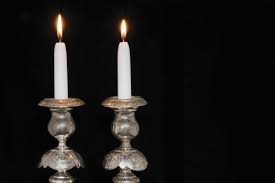
This night is different. The candles we light are festive reminders of faith and hope. I hear my mother blessing with her lips the Hebrew formula of praise and pleading with her heart the motto of her depression: This too shall pass. The flickering flames fight for survival. We need them to win; we need them to brighten the darkness of despair; to lift the veil so that we can see there is a way up and out of this vast and deep valley of desolation.

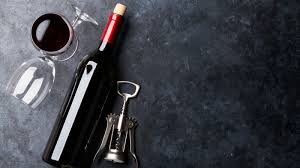
Thank God for wine. Whether red or white or any color in-between, pretend you are a master wine connoisseur, and let it linger in your mouth. Taste the earth, musky and full or dry and acid. There is a miracle on your tongue, the process from seed to bottle. It is worthy of blessing.

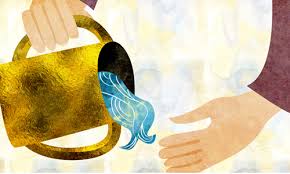
This night we wash. Hands in water in a bowl. In my house I pour from a pitcher and as a blonde and blue-eyed acolyte robed in white and red in a soaring cathedral, I offer my “priest” (the youngest child) the purity of being cleansed. But forget my silly fantasy. Add some soap to defeat the virus. Forget the bowl and pitcher. Wash well and as you lather sing an early Dayenu.

Parsley, peas and peapods, anything that grows green. It is Spring after all. And that means hope dipped in salt water. And that means we will get through this. And that means: Next year in Jerusalem, Paris or even Rome. That means next year in a crowded room, shoulder to shoulder, hot and sweaty, my good clothes itchy against my skin. Next year back too long and boring and when will we eat.

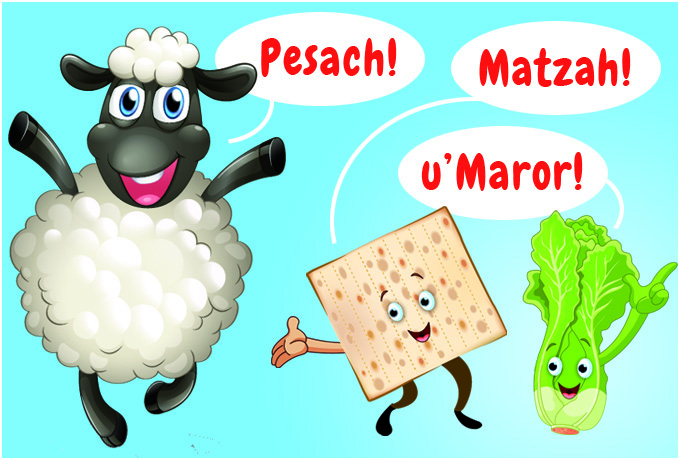
I guess this is turning out to be a different Haggadah or more precisely a different Seder. I don’t think I’ll get to all 14 steps and who has the patience for this anyway. It’s really all about the Matzah and the story that it tells. Rabbi Gamliel is quoted in the Haggadah as saying: “Anyone who has not said the following three things on Pesach has not fulfilled their obligation: the Passover sacrifice, matzah and maror.”  So I’m saying them.

Pesach – in ancient times the sacrifice and aroma of roasting lamb. How much has to be sacrificed in order to preserve the miracle of freedom. The willingness to believe that we can be redeemed. That there is a force in the universe we can tap into to light our way and walk the murky path through a sea of reeds to the other side.

Matzah – break it now. Break it into two uneven pieces. (It would be a miracle if it split evenly.) The larger piece gets hidden. Maybe in the folds of your napkin; maybe in the margins of the book; maybe under a pillow; maybe behind a piece of furniture – hidden for a different generation to find. Because the story we tell of Egypt, slavery and the road to redemption is not just the story of us; it is the story of every generation; it is the story of them. I know we call it the bread of affliction but have you ever had matzah slathered with whipped butter and strawberry jam?

Maror – The Bitter herb. How much more do I need to say. It isn’t about denying the bitterness that comes with living. It isn’t about negating how hard it was to be a slave to Pharaoh. It is about recognizing the bitterness and finding a way to make it somewhat sweeter – like dipping the horseradish root into that mixture of apples or dates and nuts or apricots and wine and cinnamon or cardamom to make it bearable. So do you know what lettuce wraps look like in a restaurant: wrap your bitterness with the sweetness of family, friends, love, affection even if you have to do it from memory. Eat the Maror any way that works for you. But I would do it like Hillel used to, sandwiched between two pieces of Matzah, savoring with every bite the sweet and sugary stuff we call LIFE.

OMG! I almost forgot. Have you been sipping the wine? I hope so. The Seder calls for four glasses – each has its own promise. And with each sip we bless the story of liberation that we tell. It is a retelling of ancient truths that we are in this together. That we will find a way out of this together. That we do not tell this story just for us. We tell it to change the world connecting love and loss with life and liberty.

The Haggadah ends with a song about a parent and a goat. In one of my favorite poems, Nathan Alterman brings the song to life as his words help me conclude my Passover story. We are all clinging to the edges of the pages. We are living in the margins. But the strength of Passover is the promise of an open door and a world where plagues are drops of wine and each of us is living unafraid singing about tomorrow.


The Kid of the Haggadah

There in the market place, bleating among the billy goats and nannies,
Wagging his thin little tail—as thin as my finger—
Stood the Kid—downcast, outcast, the leavings of a poor man’s house,
Put up for sale without a bell, without even a ribbon, for just a couple of cents. 

Not a single soul in the market paid him any attention,
For no one knew—not even the goldsmith, the sheep-shearer—
That this lonesome little Kid would enter the Haggadah
And his tale of woe become a mighty song. 

But Daddy’s face lit up,
He walked over to pat the Kid’s forehead—and bought him.
And so began one of those songs
That people will sing for all history. 

The Kid licked Daddy’s hand,
Nuzzled him with his wet little nose;
And this, my brother, will make the first verse of the song:
“One only Kid, one only Kid, that my father bought for two zuzim.” 

It was a spring day, and the breezes danced;
Young girls winked and giggled, flashed their eyes;
While Daddy and the Kid walked into the Haggadah
To stand there together—small nose in large hand, large hand on small nose. 

To find in the Haggadah—
So full already of miracles and marvels—
A peaceful place on the last page,
Where they can hug each other and cling to the edge of the story. 

And this very Haggadah whispers,
“Join us…you’re welcome here … you belong,
Among my pages full of smoke and blood,
Among the great and ancient tales I tell.” 

So I know the sea was not split in vain,
Deserts not crossed in vain—
If at the end of the story stand Daddy and the Kid
Looking forward and knowing their turn will come. 

Happy Passover!!

It is Time

It’s time to write a book. Or at least it’s time to put my files in order. Or maybe buy that scanner and get rid of all that paper. Or start an online course or find a good book but of course I am doing none of it. All I tend to do is run down my battery on my laptop.

Although I did make a “Mellow” playlist this morning on Spotify. Kudos (there is probably a more “woke” word than that) to Lab/Shul for their link to a Healing Playlist. https://open.spotify.com/playlist/6ZLvq2LbdOxDn6MMsBFA1B

It probably isn’t for everyone, but it felt good to at least do something. (PS – it is possible the link won’t work unless you have Spotify — above my pay grade.)

I don’t know about you, but I feel somewhat powerless. I am observing the laws of social distancing and sheltering in place. Whoever came up with these phrases did a good job knitting them into our shared language pool. I am washing my hands way more than ever before and have discovered that the creases in between my fingers are part of my hands as are the backs or tops and they all need to be scrubbed in the 2X Happy Birthday ritual. I am not making fun of any of this. I am commenting to myself how we create and develop new social norms.

What is true for me is that as isolating as all of this can be, the reality that it teaches me is that we are part of the same collective. There is an organic connection between us, and the virus is teaching us to be conscious that we are connected in many more ways than we ever thought. It is teaching us to be appreciative of the people who care for us like the medical community, like the education community, like the people who stock the shelves of our grocery stores, like the manager at Publix who greeted everyone who was in line to get into the store cheerfully, handing them an already sanitized cart.

It is making us adapt in large and small ways. Like I thought we were making chicken soup today but there was no chicken. So, I am going to try and recreate my mother’s sweet and sour cabbage borscht. (I guess the book will have to wait.) It is reminding us to be kinder It is connecting us even as it separates us. Loudly and clearly it says: this is a very small world and what happens in China happens here. And wouldn’t it be great if at the end of the day it motivated our world to work collectively and cooperatively because all borders are really artificial.

Vulnerable

She beat me to it. Not that I was asked to write for the NY Times Sunday Review, but I so resonated with Mary Pipher’s piece: “I Love the World, but I Cannot Stay”. Thinking about death and thinking about your own dying is not something we do very often. Although being in the Rabbi business I have seen a lot of end of life scenarios and shared many diverse and personal rituals of passing. They invariably remind me in some unexpected way of my own time in this realm of existence and when or how it will end.

The coronavirus has not helped. The media reports that the virus is especially lethal to our elderly and those with underlying medical conditions. No matter what my heart and spirit say – one of those is me. I read every article about how to protect yourself. I am washing my hands many more times a day. I am trying not to touch my face but even just writing these words makes my nose itch. And I want in Pipher’s words: “to die young as late as possible.” But it’s not in my control no matter how much hand sanitizer I rub into my hands.

It brings me to Purim, our holiday of the month. Esther is waiting in the wings to appear in the King’s bedroom. Mordechai is watching and observing how the virus of hatred and prejudice is spreading in the ante chambers of Haman’s mind. Ahasuerus is oblivious just wanting to keep the party going enjoying the trappings of power. And God is hinting that we better work this out amongst ourselves since HE/SHE is silent throughout the book.

And it is not quite a pandemic as we hold our breaths to see what and where the Coronavirus will do with itself and how it will infiltrate our lives as we go from supermarket to pharmacy to see if there has been a delivery of Purell. Yesterday I was in a meeting where we were planning a community gathering for a month from now and we knew out loud that the public aspect of the assembly was at risk since no one knew what the future held.

Of course, even before we had ever heard of the term Coronavirus, no one knew what the future held. Life is really about that even if we aren’t ready to admit it. Existentially every step is precarious, and every handshake exchange is more than a willingness to be open and extend good wishes of peace and harmony. Even before the virus emerged to place our finitude and fear at the center of our daily story, we transferred our own genetic material to each other with barely a touch.

The struggle for me is to find balance and act appropriately caring for myself and others. A friend of mine reminded me that in the Mussar world it is “equanimity” that we need. In Hebrew the term is “Menuchat Hanefesh” and it translates loosely as “rest for the soul” or “tranquility”. But here is the thing about the Mussar teachers: it is not a passive soul trait. It is not wait and see. It is not blind trust and leaving it all in the hands of God. It is balance. Finding your way through these corridors of confusion and living with both joy and appropriate caution. Finding a place for your anxiety and channeling it to proper safeguards. Finding the courage to be and not letting fear paralyze.

It is amazing how something so small that you cannot see with your naked eye can be such a large test for our society. The days and weeks ahead will tell us if we fail or succeed. And success is not just about a vaccine or cure. Success is government working in the interest of the people. Success is all of us caring compassionately for each other. Success is love is love is love.

IMHO 2

We came home from LA last night and turned on CNN to see if the world had changed while we were flying across the country. Cuomo was hosting a town hall conversation with Bernie Sanders from Charleston, South Carolina. We tuned in somewhere in the middle so I didn’t hear all the questions but there were enough that were good and telling and I like the way Bernie answered many of them fairly directly and unapologetically. I think that distinguishes him from lots of the other candidates. That doesn’t mean I like all of his answers or think he is “smart” to insist on using the word “socialist” in his description of himself as a democratic socialist. But you “gotta” admire his grit.

But there was one response to a question from a Jewish student that bothered me as much as some of his other answers. He was asked about his Jewish identity and what it means for him to be Jewish. I do not doubt the authenticity of his answer which was Holocaust based. He remembered growing up in a neighborhood where people had tattoos on their arms. He recounts that his father’s family was wiped out by Hitler and when “my brother and I, and our wives, went to Poland to the town he was born in. He fled terrible poverty and antisemitism. The people in town, very nice people, took us to a place where the Nazis had the Jewish people dig a grave and shot them all; 300 people in there….”

It isn’t that he was profoundly affected by the Holocaust. There is barely a Jew who consciously or unconsciously isn’t. For me, it is that Jewish identity can’t be linked to Auschwitz and death alone. I wanted to hear about values and principles that are informed by Judaism and the Jewish experience. I wanted to hear about a vision and a dream that was primed by a Jewish engine that would look forward and not backwards. I guess it’s the Rabbi thing in me.

That doesn’t mean I don’t admire him. It also doesn’t mean that I have decided to vote for him either (but I will have to make up my mind fairly soon as my mail in Florida ballot is sitting on my desk). His recent tweet about AIPAC is terribly disturbing. He writes that “The Israeli people have the right to live in peace and security. So do the Palestinian people. I remain concerned about the platform AIPAC provides for leaders who express bigotry and oppose basic Palestinian rights. For that reason, I will not attend their conference.”

Sad. Disturbing. Painful. Palestinians deserve to live in peace and security. True! Israelis deserve to live in peace and security. True! But not attending an AIPAC Conference as a leader of the Democratic party sends a terrible message. According to AIPAC leadership he has never attended an AIPAC Conference. One wonders how committed he is to a viable Israel. One wonders (and this is terrible) what he learned standing at the grave of 300 Jews in his father’s Polish town. Go to the conference Bernie.

Starting Again

I got an email this morning from my college roommate and longtime friend who said: “Time for you to get back to your blog.” (You reading this Larry?) So, its Friday morning; the house is still quiet; I’ve finished my second cup of coffee; The TV is in the other room and the news can wait as I consider his “advice” to find my way back to you.

I don’t have a good reason I’m willing to share as to why I have stopped writing for these many months. So I’ll just start again by introducing to those of you not familiar with it this big initiative called “Daf Yomi”. On MyJewishLearning.com these are the words of introduction:

“Are you interested in joining the world’s largest book club?

Daf yomi (pronounced dahf YOH-mee)  is an international program to read the entire Babylonian Talmud — the main text of rabbinic Judaism — in seven and a half years at the rate of one page a day. Tens of thousands of Jews study daf yomi worldwide, and they are all quite literally on the same page — following a schedule fixed in 1923 in Poland by Rabbi Meir Shapiro, the founder of daf yomi, who envisioned the whole world as a vast Talmudic classroom connected by a global network of conversational threads.”

I’m participating mostly through the My Jewish learning emails I get every day because it is concise, relevant and interesting. Sometimes I head over to Sefaria.org to read the actual text and get enticed to get lost in the minds of the Rabbis who probably were somewhat A.D.D. since they rarely stay on topic and wander associatively rather that literally. But this morning the topic was prayer – yea I bet you are saying what else would the Rabbis talk about – well – stick around – you could be very surprised.

Back to two thousand years ago and the Rabbis discussion of what happens if you have prayed your daily prayers already but find yourself in a congregational setting and they have not begun their prayer practice yet. Rav Shumuel says: “If they (you) can innovate within [the prayer] in some way, then they should go and pray again, but if not, they should not pray again.” In my words: Try to find something new in everything you do. To stick with Rav Shmuel and the setting way back in Babylonia, it doesn’t necessarily mean that you have to change the prayers you say but if you can’t find a way to let them speak to you differently then maybe you should step this one out.

And this isn’t just about prayer. It’s about the way we approach many of life’s disciplines, from the stuff we do in the gym to the way we express our feelings, to the books we read, the work we do, the writing of this blog. So I’m back trying to renew myself and these words and looking to connect to all of you.

PS – Daf Yomi began again on January 5th, 2020. I know there is a lot of stuff in your inbox but just for the sake of expanding your horizons – check it out. It is never too late to start again. Here are some accessible Daf Yomi websites.

https://www.tabletmag.com/tag/daf-yomi

https://www.sefaria.org/daf-yomi

https://www.dafyomi4women.org/daf/

Deconstructed

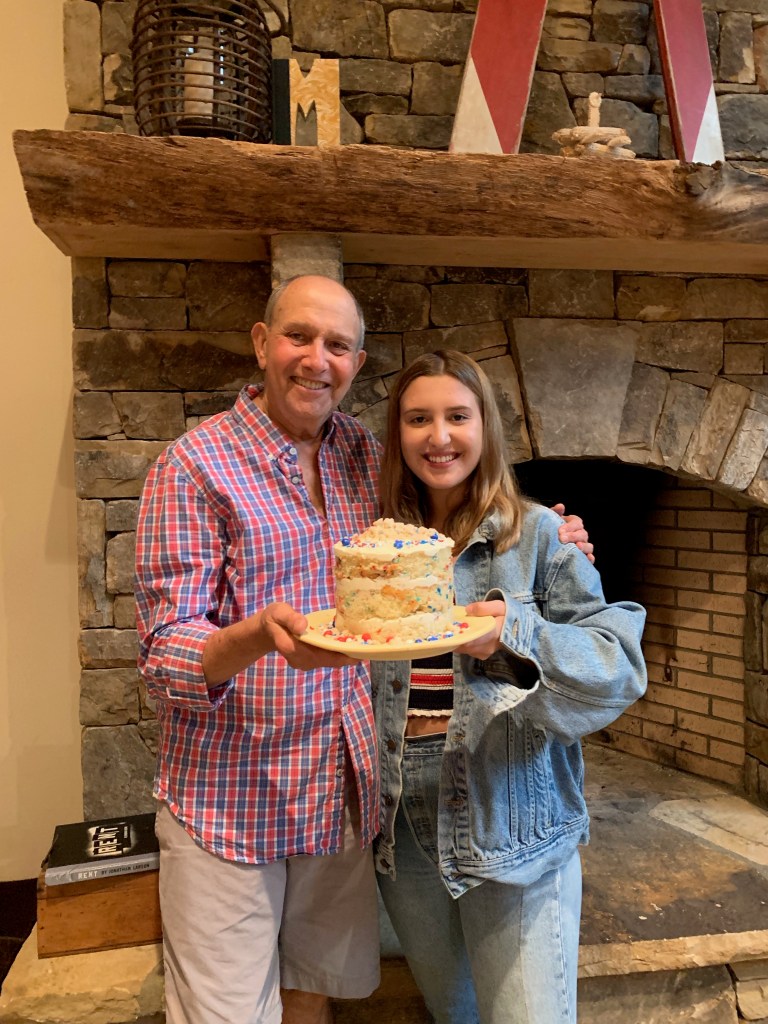
It isn’t the cake. Not really but sort of. It is the connection and the laughter; it is the planning and the execution; it is the hands dirty and sticky. It’s the math and the sequencing; it’s the magic of the kitchen and the tidbits of conversation unrehearsed and unexpected. It’s what happens when you bake together adapting as you go along, the goal that moment when iced and plated we are ready for the picture.

This is the third Fourth of July bake off that Tali and I created.  Each year a different cake but every year a patriot’s theme. The first year it was the flag and we learned that not all food colorings are created equal. So the red of our fist cake batter was more maroon and the blue more of an aqua than navy. The second year we went for the fireworks and as you cut the cake red white and blue M & M’s cascaded to the plate, an homage to the rockets red glare.

This year we called it deconstructed. We showcase the guts of the cake, with red white and blue sprinkles peeking through, the frosting an afterthought. Or another way of putting it: The truth of America in 2019 can’t be hidden under a parade of icing.  Who will this country belong to? Who will this country welcome to its borders? How will this country rekindle its vision and promise for the America of many different cultures, colors, heritages and traditions? We wanted our cake to ask: What is really great about America: the confectionery coating of a puerile patriotism or the gore and guts of you and me who want an inclusive, fair and open society?

But enough of the cake and its politics, it is the experience of forming memories together – It is the love, love, love as powdered sugar coats the counter. It is Jacob doing the math and Corey doing the critique and Dani offering support, missing Sammy and Maya at camp. It is ignoring how much butter is in buttercream. It is life at its best. It is thank you to Momofuku Milk Bar for posting their recipe.

See what can happen when we share?

D-Day Reflections

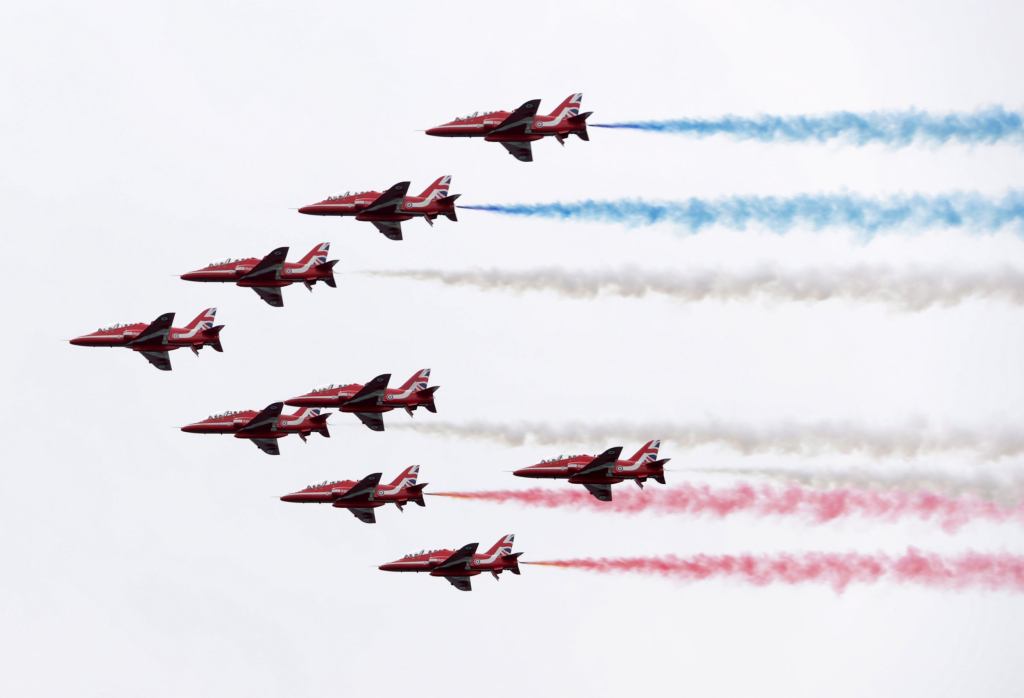
I have been watching the commemorations of the 75th anniversary of D-Day. It has been touching, poignant and important. I loved the red, white and blue flyovers the Normandy beaches and seeing Queen Elizabeth on the podium in Portsmouth. I was grateful that President Trump was respectful. But the stars of the moment were the surviving veterans themselves. Some of who had never been back to this place that changed the course of history and saved the world from Nazi tyranny and atrocities. This place that claimed the lives of thousands of young, brave men who sacrificed themselves for us, yes for the lives we lead and the future our children can look forward to is indeed sacred ground.

I tried very hard not to personalize this celebration of courage. Until I heard the clip of the President being interviewed on British TV by Piers Morgan when he said that he never was a fan of that war, ”I’ll be honest with you. I thought it was a terrible war. I thought it was very far away.” I can’t believe he really said that. But then again we are becoming calloused to the things he says.

Vietnam was very far away. It took me three plane rides to get from Newark, NJ to Ton Son Nhut, Saigon. I wasn’t a fan of that war either but I didn’t have bone spurs that kept me from serving. Funny they don’t seem to keep him from playing golf. I was lucky though. I served as a Chaplain and even if the war had little or no meaning my role there did. I could feel what it meant to the Army, Navy, and Air Force soldiers that there was a Jewish presence there. Someone cared; someone listened; someone brought a taste of what Judaism meant to them wherever they were.

We didn’t win that war. We didn’t even have the high ground morally or politically. We sort of knew it then but we sort of didn’t also. They told us we needed to stop the Red Menace. They told us we were fighting to preserve the freedom of the South Vietnamese. We didn’t want to believe that we were killing children and that dropping Napalm from the sky was a necessary evil.

How different were the wars and how different the experience of the returning soldiers. But none of that takes away from the 90 plus year olds who returned to Normandy and to the place where they waded ashore or dropped from the sky to fight for us. And none of that takes away from the rows and rows of crosses and stars in the American cemetery. And none of that takes away from the most fundamental of all facts: America salutes you.

Along

I recently started taking an online course with Billy Collins (me and I don’t know how many other people). It is through a website called Masterclass and for $80 bucks I got to watch and listen to 14 or so lessons with this wonderful poet who provides not just his guidance but also a workbook with homework. I am far from finished with it but today we examined a Shakespeare sonnet. It was the most traditional of all the lessons.

The workbook challenged you to create your own 14 line sonnet, reminding you to keep the iambic pentameter rhythm going. It didn’t need to rhyme, he said but I thought if I am gong to try it, gotta go the whole way. Here is my first sonnet. it is far from William’s and it is far from even close to perfection but for some reason I thought I could share it with you. It just might be the start of a new series of “posts” some of which rhyme and some of which tell pieces of my truth. We will see how brave I am.


Along the way three men arrived
Singing running in multi color dreams
Winking yesterday really did survive
Stars fading stripes falling white becoming cream
 
Fluttering the wind caresses the screen
The morning breaking the sun alive
Each sound a message or a story mean
Day is born gone the men and all that’s fine
 
Alone I sit blessed to be alive awake
Pressing keys of black and white
Letters become words sentences to shake
My thoughts and feelings rarely right
 
Sun rising my words broken truth
A highway of meaning no end but proof

Israel 2020

Tom O’Brien and I are excited to invite you to join us on an interfaith Israel experience that we will lead in late April 2020.  

We have worked hard to make it inclusive for those of you who have never been to Israel before and diverse for those of you who are returning for another time. 

Our lens is the faith and life of Jesus and his followers and the traditions and culture of Judaism and the Jewish people.  We will see Israel as a thriving modern country struggling with its multi-cultural identity and as a place where history and stories of miracles and Biblical heroes merge. 

We will not forget the food, the wine, the art and the beauty of Israel as well.

Our dates are April 18-30, 2020.

We have lots of information and particulars – just email me at hshapiro23@me.com – We would love you to join us.

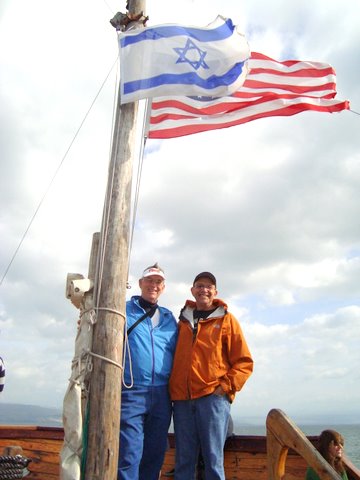
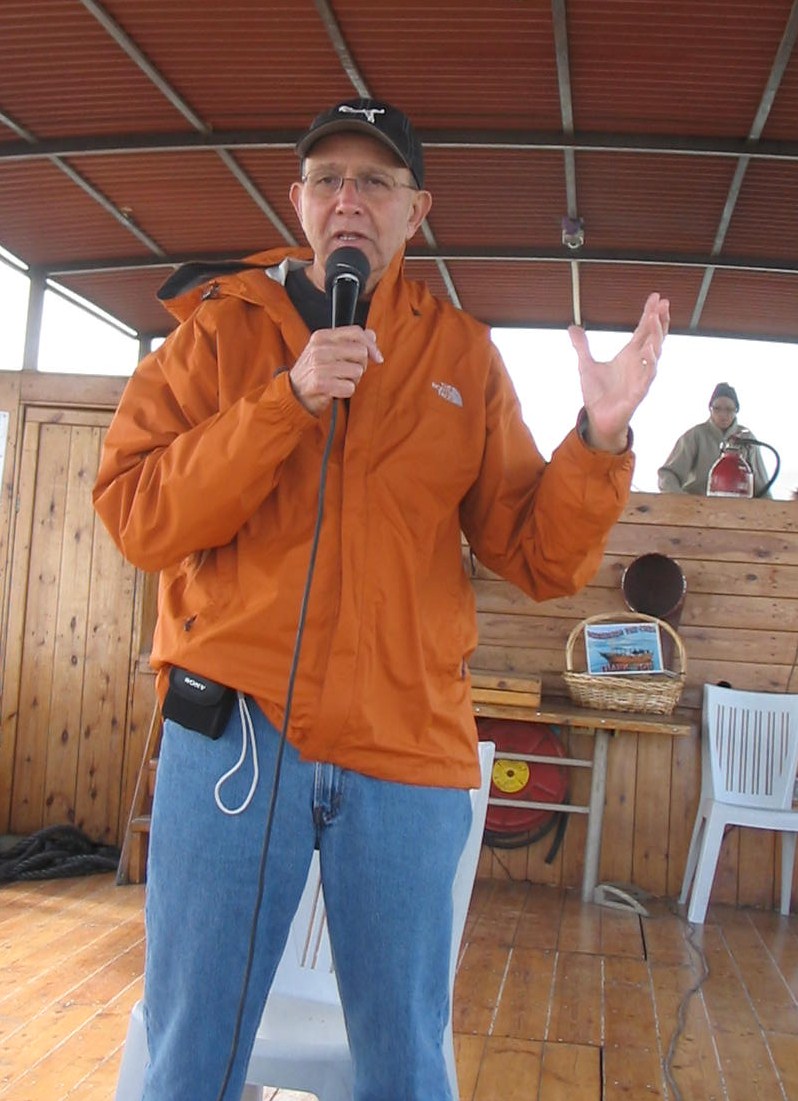
Howard in orange jacket not walking on water: Sea of Galilee

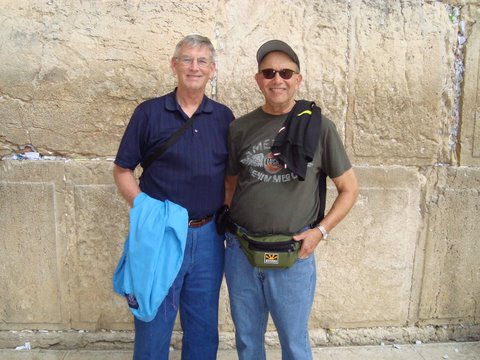
Tom (carrying blue jacket) with Howard: Western Wall

A Ball Drops

A Ball Drops

The end of year’s New York Times magazine section is my favorite. Since 1996, it has been dedicated to “The Lives They Lived”, people of some fame whose lives impacted the world they colored and enhanced. They choose an interesting mix of people. Some famous; some people who struggle through life with ups and downs, successes and failures, repeated attempts to resolve something unfinished in their lives. Always striving these are people of accomplishments but not necessarily the kind that leads to the fame or fortune we expect of front-page New York Times obituaries.

Among the people I am drawn to is Sylvain Bromberger. In 1940, a 15 year old Belgian Jew, he and his family were granted visas to travel to Portugal by the then unknown Portuguese consul general named Aristides de Sousa Mendes. Mendes defied the Portuguese’s government’s directive and saved tens of thousands of refugees fleeing Hitler. Severely reprimanded by his government Mendes died in poverty and disgrace in 1954. Over the course of his life as a professor at MIT and a philosopher of science, Bromberger wanted to know “why”. Why was his family saved? Why is the earth’s circumference 24,901 miles? Why questions he teaches us uncover the hidden and reveal the unknown, link what is seemingly unconnected. Bromberger dedicated one of his books to Mendes.

The people remembered don’t live perfect lives. Who does? But somehow their accomplishments are tied to their challenges; their successes are bound up with their defeats. One thing they all teach me: there are so many ways to make a difference. These people take the raw material we call living, shaping and fabricating it into a story only they can tell. Well that’s not 100% true. Sometimes the raw material of life formats them. And the plot is not always pretty.

When I was a young rabbinic student I remember taking inspiration from a traditional source and writing: “Everyone is born unique into this world; every soul is sacred.” I still believe that. We all have a purpose whether divinely ordained or a combination of genetic material modified by our environment, or both.

Anne V. Coates was a film editor. She won an Oscar for “Lawrence of Arabia”, discerning through her art that Peter O Toole’s blue eyes are an oasis in the desert and the Arabian sun is as much a star as Omar Sharif. She worked through more than than 30 miles of footage. Her genius was finding the right cut and freezing it into eternity.

There is a reason we are alive. Tonight a ball drops in Times Square at midnight. It will finish its descent with the numbers 2019. Sylvain Bromberger would ask us to find time this year with why questions that would help us discover the hidden arc of our lives. Anne Coates invites us to run the footage of however many years we have lived and find the clip worthy of an Oscar. Not melancholy but celebration. Not disappointment but enchantment. Not sadness but joy. Each of us is on a journey towards infinity. The lives we live are the most precious gift the universe bestows.

Turning the Clocks Back

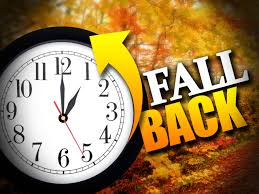
Fall BackLast night we turned the clocks back an hour. And people celebrate with an extra hour of sleep. I am not that lucky. I am up early every morning no matter what time I went to bed or what time the clock says. So I did what I love to do on Sunday mornings – put on some music and read the Sunday Times. The music I choose often depends on my mood but it has to be readable. Today I chose my Vietnam era music playlist.

It probably has something to do with the image of an African American Pastor from Emanuel Church in Charleston, SC and the Tree of Life Synagogue’s Rabbi standing face to face, arm in arm, in the three-column picture on the front page of the paper. But the music did not resonate. I picked two other playlists and then resigned myself to the one I call “folk music I like”. It has a lot of Simon and Garfunkel. You know: “Hello darkness … Where have you gone Joe DiMaggio … Like a bridge over troubled waters …”

I haven’t finished the paper yet but I have seen at least three articles on anti-Semitism and two full-page ads. The ADL leads with “Never Again. Never is now,” while an article not very far from it asks: “Is It Safe to Be Jewish in New York?” So I hate to say this and I hate to think this but I ask, what is turning back in America? It isn’t just the clocks. It is the sense of complacency and comfort that it can’t happen here. I used to say: America is different. America is an experiment in understanding. America is one of the only countries where there has never been a pogrom.

Technically that is probably still true. (A pogrom is usually associated with an organized or government sponsored massacre.) But a massacre this was and I believe that some responsibility lies with how much vicious hate rhetoric spews out of the head of our government. The clock is teaching. We are falling back into racial and religious divides. We are falling back into anti-immigrant rifts. We are falling back into the rule of violence and we better wake up. It can happen here. It did happen here. The question is what do we do about it.

By not being complacent.

By being aware.

By examining ourselves and our unspoken prejudices.

By forging alliances.

By breaking down walls.

By breaking the silence.

By talking about it.

By calling out hatred and prejudice whenever we see it or hear it.

By calling our elected officials to task.

By exercising our sacred civic duties and getting involved.

By not taking anything for granted – neither our faith, our freedom or our future.