The Sinai Lesson

Tonight is Shavuot (at least as I am writing). It is the holiday on which we celebrate the first fruits of the Spring harvest and the revelation at Sinai. It is one of the least observed of our holidays even though it is Biblically mandated and has an important message. It reminds us that at our core we are a people with a mission. We are a people who listened and accepted the revolutionary idea that there is meaning to our being beyond the limits of our bodies. Whatever you believe about the narrative in Exodus that recounts the Sinai experience complete with a golden calf and shattered tablets, we have accepted its truth and its commandment: that there is a higher law whether filtered through historical writings or delivered from a Divine Source right into the hands of Moses our teacher.

Some people think there is only one way to live the mission: black hats, black coats, covered hair, fidelity to ritual and halacha. I think every individual has the right to find their own way and there are many paths that lead to Sinai. When Tom O’Brien and I taught at FAU Lifelong Learning, we would end our session with a slide with an image of a path in the woods with the words: “Walker there is no road; the road is made by walking.” I don’t remember where we found it, but it has always spoken to me about how we make our way through life by living it with appreciation and purpose. Life is a gift. It might also be an accident but it’s still not to be taken lightly.

The Sinai lesson is that the paths we forge are not for our sole passage but that the generations that came before us and the generations that will come after us are depending on how we walk and where we put our feet. The Shavuot story reminds us that we all stood at Sinai; we all heard the words and accepted the obligations. We are called Israel – the one who struggles with what it means to be human or to put it in traditional language – what God wants from us. And If truth be told, we are having a hard time with it right now. How to defend ourselves and still look ourselves in the mirror, How to stand up to hatred without hating back. How to listen to the voices in our community and nation that we don’t agree with and not write them out of our circles.

You know I am speaking about Israel and her current government. You know I am speaking about the United State and our current administration. You know I am writing this to myself because this holiday we begin tonight says: We can do better.

Oranges, Olives and Lemons

It feels like every year there is a new item to add to your Seder plate or a new reading to insert before the second cup or the eating of answering of the four questions or the telling of the story. This year its lemons. Lemons for their color; lemons for their taste; lemons for the hostages sitting still in darkness and wondering if they will ever see the light. I like how the tradition grows and how it adapts. I like that it is not frozen in time or place but that it is living and breathing.

Yes there is an order to the Seder. And I follow it more or less. And the words written centuries ago take on different meanings almost every year it seems. Like the word “enough” – in Dayenu – it would have been enough. Yes. the poem/song lists all the things we have historically experienced as a people from leaving Egypt to discovering Torah and Shabbat, from building the Temple to entering the Land. Any one of them would have been enough. But there’s another way to roughly translate Dayenu. (Hebrew scholars look away!) It is enough. Enough with war; enough with Hamas terrorism; enough days the Hostages have lived in tunnels; enough bombings and death of the innocent both Palestinian and Israeli; enough tariffs, enough ICE, enough presidential privelege and power grabbing; enough shirking of congressional responsibility in leading this country.

The trick in leading a Seder is to balance the ritual, text and free flowing discussion. People sometimes tell me that they went to a “real” Seder where they read the whole Haggadah and even went back after the meal. If I could rewrite the order of things I would put Elijah before hard boiled egg – Elijah is the harbinger of hope and promise – that opening of the door isn’t just to welcome a spirit to sip the wine. that opening of the door is an act of faith that we can make tomorrow better than today.

Of course we’re not doing so good with today. Hence the lemon. The piece I saw says put the lemon on the Seder plate and slice it right before Maror. Add it to your Hillel Sandwich – so the bitterness of slavery and sweetness of freedom are integrated with the sharpness of the hostages’ fates.

At LabShul, one of the out there congregations in our country has a heading on their Seder instructions which I love. SEYDER: Say More/Read Less. So here’s my take: This is all about a discussion. It is not about slavishly following the text. It is reacting and intereacting with the tradition. It is about interrupting the leader. it is about questioning the rituals. It is about lemons, oranges, and olives.

I Was Cautiously Hopeful

I’m not surprised; I am disappointed. I’m anxious and hopeful at the same time. I’m reticent to even write these words, after all I am living relatively securely in Florida and the things that worry me do not include missiles raining on my head from as close as Gaza and as far away as Yemen. The cease-fire news yesterday was a blessing. But even then, I feared optimism was somewhat premature.

Maybe we know too much; maybe we think what we know is really not the truth. As of this writing, Netanyahu is saying that Hamas is reneging on part of the deal and the Israeli cabinet meeting to discuss and hopefully ratify the agreement has been postponed. That was 14 minutes ago according to the Times. What will happen next is unknown to me although given President Biden’s announcement last night of the work that his administration has been constantly doing to achieve cessation of hostilities and a return of the hostages it is hard to imagine that it will fall apart again.

But there is Monday and the inauguration of President Elect Donald Trump. It so echoes Carter/Reagan and the freeing of the Americans from Iran in 1981. Who wants to give whom what? Who is afraid of whom? Is Netanyahu ready to give Trump the gift of making the deal? Is Hamas afraid of Trump’s threat to bomb the hell out of them?

Sad. Disheartening. I hope by the time you read these words, my fears, anxiety, disappointment will be something of the past and there will be a new day dawning with the hostages returning home and guns silencing as hints of a permanent peace rise out of the darkness. It’s probably going to take something the Bible would call a miracle. It’s immensely risky because the forces of evil are real in this world and everything I know says that its name is Hamas.  It’s definitely going to take courage and faith. But I am not so sure there are any other good alternatives  – so read these words as a prayer.

A prayer for peace; a silent petition to all that is good or God in the world for sanity; a petition for joy to come in the morning even though we all know it will be tinged with sadness for all those whose deaths we mourn.

Choosing to Hope

Some of you are not going to like this but I am “unplugged” which means I am not connected to any power grid that might like to restrict what I have to say. So, I am going to tell you that I haven’t been this excited about the possibility of our national politics as I am right now. And I am willing to admit that I might be being manipulated and or naïve and or played but I like the feeling, and it is a combination of hope and joy.

There you have it. If you have been watching the Democratic Convention you know where this is all going. I am excited to vote for something once again as opposed to voting against someone. I love the enthusiasm; I love the excitement; I love the belief that this country with all its flaws and problems is an America filled with promise and filled with potential. And even if we disagree or differ in how we see tomorrow or yesterday, we are one nation, indivisible with liberty and justice for all.

I just finished rereading “When Breath Becomes Air” by Paul Kalanith. One of the sentences that stopped me was: “The word ‘hope’ first appeared in English about a thousand years ago, denoting some combination of confidence and desire.” I wonder if that means that people didn’t hope before or there was just no way to express the emotion in English. Actually, I’m not really sure what that sentence means. I don’t think people can live without hope. Or maybe I shouldn’t generalize. I can’t live without hope.

The dictionary defines hope as the expectation or belief that something expected will happen. I think you can hope that something unexpected can happen as well. Like: I hope there will be a hostage deal and Hamas and Iran will stand down and Israel can live in peace. Like: I hope that we can have a substantive discussion on the future of our country and stop the name calling and childish snipes at one’s race or name. Like: I hope that the next Congress can govern and not quibble and put our country’s interest in place of their own. Like: I hope my grandchildren’s’ America is safer, brighter, fairer, more prosperous and healthier that my own.

I happen to believe that hope and faith are interconnected. In my world to have faith is to believe that your life has purpose; it is a gift; you are here to make this world a better place, sometimes just by smiling, sometimes just be voting, sometimes just by loving. Neither faith nor hope are passive – they demand action, and they have the power to change our world.

By the way the image at the top is moss. Moss has a mind of its own, growing in really unlikely places. I like it cause it is fairly unpredictable, like hope.

.

I Am Lord of Memory*

Eileen and I went to see Judy Collins the other night at the Brevard Music Center. She confidently walked on stage in a bright pink long dress with a black sequenced jacket. She proudly announced that she was 85 and from mid orchestra she was looking good. She peppered the concert with a lot of good stories and corny jokes. One of the many things I did not know about her was the relationship she and Leonard Cohen had. She credits him with “pushing” her to write her own songs and throughout the concert sang many of his more esoteric pieces. The concert was delayed for a half hour because of serious thunder and lightening but 2000 people still showed up even some June bugs or fireflies. They flashed in the dark as so many of us celebrated this night of memory.   

One of the Leonard Cohen songs she sang was “Priests”. It’s an elusive and mysterious song/poem about love, memory, loss – all that is holy. I went online to try and put the lyrics into one complete and cogent paragraph. I failed. For me it is the wedding of the haunting melody with the words; it is the marriage of the lyrics with the melody to my own memories.

This all came home to me yesterday when I learned that my friend and colleague, Rabbi Fred Pomerantz died. I knew he was having health issues, but he wasn’t supposed to die. I don’t know whether he loved being a jazz musician first and a Rabbi second or there was no way to separate the two. He was a drummer and the beat of his life and career were intermingled with great joy and deep pain. This is not the place to eulogize him, but it is the place to remember the intersection of our lives from Cincinnati to Closter. It was filled with laughter and tears, it was complete with searching and finding, questions about how to live so that the days of our lives didn’t become material for a soap opera. He was creative, funny and unique all in the service of our people and our Judaism.

Judy Collins isn’t that much older than Freddy or me. She stood on that stage for over an hour and a half and amazed me with her stamina. Sure, she had cliff notes; sure, she turned to her musical director to ask him for details she temporarily forgot; sure her voice has changed. But that’s life – it is all about change – nothing remains the same – and nothing can be taken for given or granted. And it was refreshing to be with her as she proudly celebrated who she was at this stage of living.

Between Judy and Fred it reminded me that no matter how old or how young, our challenge is to make a sacred noise, to sound the bells, to beat the drums, to hear the music of Divinity or the Universe pulsing through our cells. The challenge is to love it all; appreciate the moment; grow the good; minimize the bad; celebrate the remembered and forgotten. Be all you can be even when it isn’t all you were.

Right Freddy?

*From “Priests” by Leonard Cohen

Happy Anniversary


Dear Gentle Reader,

(To borrow a phrase from Lady Witherspoon of Bridgerton fame.)

You might remember my finding a stack of sermons in our storage unit all typed (like on an electric typewriter) on 5 X 7 cards – mostly green, some blue, all of them pre-word processing days from the mid-70’s to the early 90’s. They are mostly High Holy Day sermons and tend to have some common themes.

Here are some general impressions. They are too long and tend to be repetitive. They are inconsistent but some are brave, and some are foolish, and all try really hard to be relevant, some succeed. They are also incredibly “chutzpadik”. Who am I to be saying these things? Who am I?

Take the one about “Love and Marriage.” I didn’t date a lot of these sermons but in researching the books or articles I quote I think this one is from the mid-70’s. That means I was in my mid-thirties and had been married for maybe ten years. What the ……. did I know about love or marriage?

But it did begin with a great Chasidic story about two boys who used to like playing Rebbe when their father (the Rebbe) was taking a Shabbat afternoon nap. They would take turns and critique each other’s ability to model their father when he counseled people who came for advice. This time the congregant was asking his Rebbe about marriage as he recounted the quality of his relationship with his spouse. At the end of the play acting, the son who was playing the Rebbe asked his brother to critique his “performance”. His brother said: “You did great, and you said all the right things, but you forgot the most important piece of any Chasidic session. Abba (dad) always began with a sigh – all Chasidic stories must begin with a long, slow, deeply felt sigh.

And so it is. Today is Eileen and my anniversary. And I think a sigh is appropriate – the sigh that slows us down and invites us to reflect on the days and years of our marriage. The sigh that admits not every day was perfect but year after year we turned our challenges into blessings. 

Sighs come in many variations. There is the sigh that says: here we go again. Life has a way of repeating lessons unlearned. And it is hard to change; it is easy to fall back on old habits and ways. It is easy to point your index finger at and forget that there are three others pointing back at you. It is easy to forget the word of the day in a marriage is “us”.

You are probably getting the wrong impression here. Another sigh. We have and we are blessed. Not only with children and grandchildren who are a constant source of joy and pride. Not only with relatively good health given our years. Not only with affluence and influence and meaningful roles we played in society. Not only with people who love us and people we love. Not only with laughter and joy and even sorrow and loss – but most of all, we are blessed with each other in good times and bad times, in the work we do when we say: I love you.


Father’s Day

I decided to get my walk in early this Father’s Day morning and let Spotify create a playlist for me. The computer decided “Forever Young” would be a good first song and did it know how ironic the choice was? This is the saying amongst my peer group: “Growing old isn’t for cissies.”  Ain’t that the truth, though I am blessed to be relatively healthy at this moment of my growing older. (Not that you would know it from the number of pills I count out each night and morning.) When I ended my hike, the algorithm had me at “Papa Was A Rollin Stone.” If you don’t know the song, it is about an absentee father, “wherever he laid his hat was his home and when he died, all he left us was alone,”

It got me to thinking about my father. His name was Charlie and when my mother and he were having a loving moment, she used to call him Sir Charles and he called her, Lady Marilyn (her middle name). In my memory, those moments weren’t as many as we would have liked them to be. My father worked hard all his life. He was a pharmacist who had his own drug store before I was born and then worked as a pharmaceutical rep and subbed several nights and weekend days in a drug store in Waltham, Mass. I remember him compounding meds and measuring potions with great care. I also remember him letting me play at being a soda jerk at the fountain where I made a great Lime Rickey. He catered to my mother during her illnesses. But after his car accident on the Maine Turnpike which put him in the hospital in a coma in Lewiston, Maine where we spent an upside-down Passover waiting to see if he would regain consciousness, there was an angry side of him that surfaced.

They say you are supposed to be slow to anger and quick to forgive. He struggled with that, and if I am honest, so do I (the quick to forgive part.) But I’m not going to talk about me – I’m going to remember the moment before my father’s funeral when we were alone in the chapel and Eileen took out three cigars from her pocketbook and placed them inside his coffin. You see my father never went anywhere without a cigar. The smell of cigar smoke, no matter what quality, brings me right back to him. And to the affable, personable salesman with a trunk full of samples that he felt were meant to be shared.

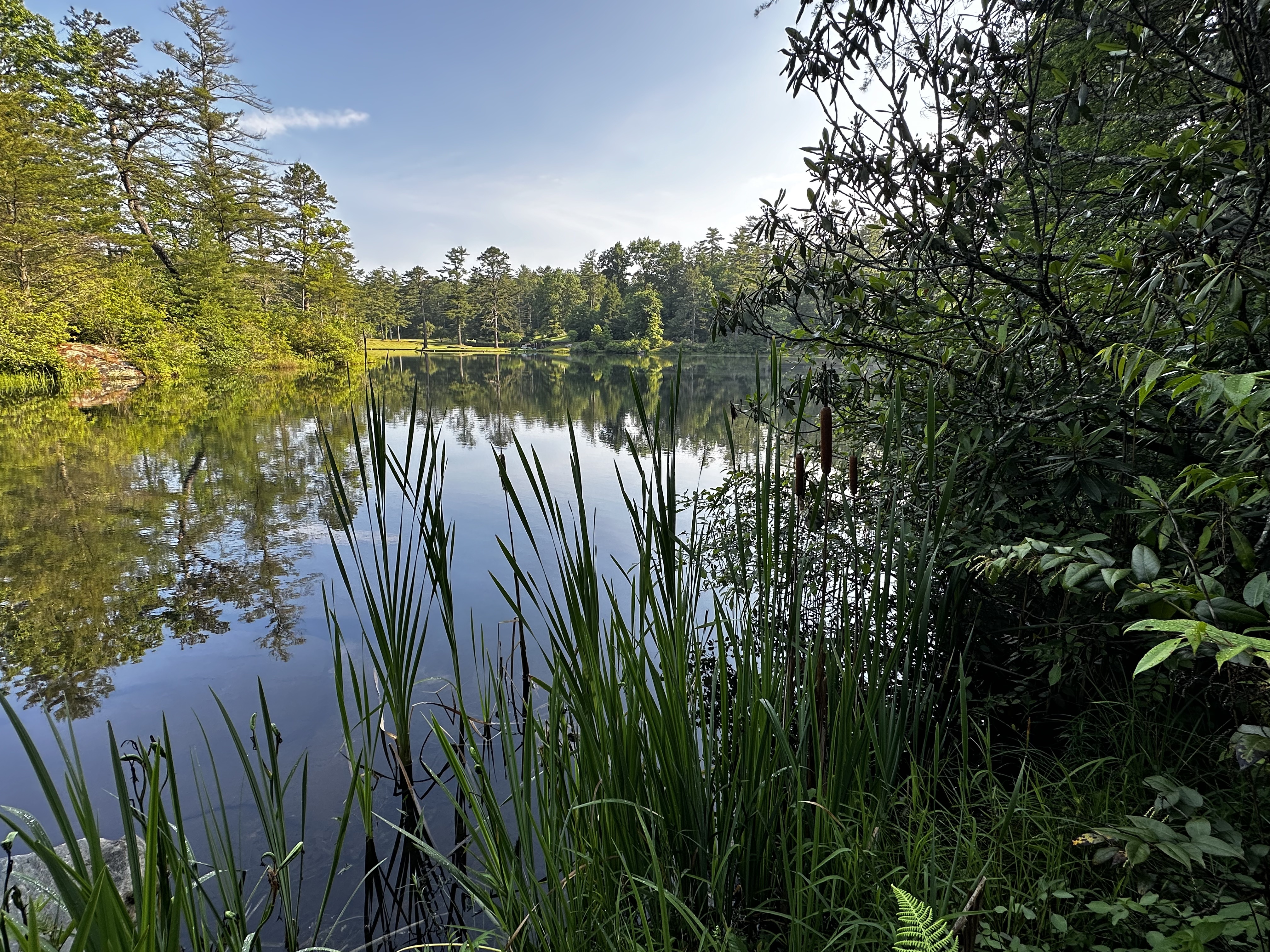
I took the picture above early in my walk this morning. The Lake is calm; the bullrushes (is that what you call them?) are straight and strong. The waters and the sky reflect each other in peace. So may it be with us.

Israel Diaries 4

Our security guard put on Tefillen.

We are on our way to the Gaza Envelope. That means we are visiting the sites that were directly attacked by Hamas on October 7th. They are within miles of the Gaza border. We have Rafael (our security guard) with us today; we have helmets with us today; we have had a security briefing on what happens if there is a red alert. (Siren that warns of incoming mortar or missles). Perhaps I am totally naive, but I am not overly anxious.

Why are we going? To learn; to bear witness; to show solidarity; to understand what was and what is; to experience a small piece of the nightmare of 10.7. As we were driving down from Tel Aviv, Rafael put on a Kippah and Tefillin. My guess is that Rafael is in his twenties; when Eileen was introduced to him, she said, “You’re too cute to be a security guard.”  I am going to try and ask him how he identifies religiously.

It is many hours and many experiences and many tears, anger and laughter later. We are back at our hotel in Tel Aviv. I need time to process it all. Our first stop was Kibbitz Nir Oz and then the Nova Festival Site. Both were ground zero for the morning of October 7th and visiting them you mourn, remember, witness the pain and have too many unanswered questions.

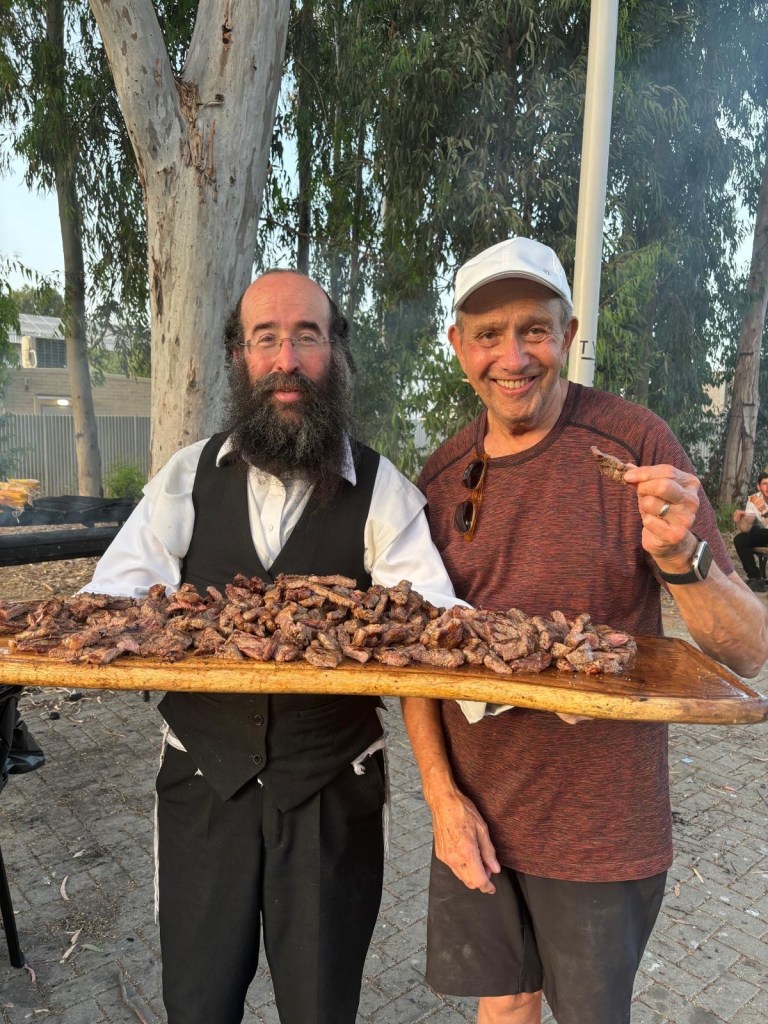
At the end of the day, we visited an Army base, home of the engineer corps of the IDF. They asked us not to take pictures of their faces or parts of the base. They are responsible for exploring, discovering and clearing the tunnels in Gaza. We walked through one of their training facilities and provided and shared a barbecue dinner. The picture above is one of the volunteer cooks and me. Quite an experience and a better way to end our day – showing our appreciation and gratitude to these young men and women who are on the front line defending Israel and us.

There are signs all over Israel: We Are Stronger Together.


Simple Truths That Are Very Complicated

I don’t think I have ever reposted something on this Blog. But this needs to be said and read and reread and remembered and told time and time again. The attack on Israel yesterday is not business as usual. The attempt to blame a failure of Israeli intelligence may be fair but it is premature. The explanation that Hamas is using a perceived weakness in the fabric of Israeli society because of the demonstrations against the current government may be true but it is irrelevant. The pontification that this attack 50 years after the Yom Kippur war is linked to the nascent Saudi – Israel “deal” is speculation. We all want to make sense of the senseless. This is what is true. Hamas wants to destroy Israel. And that means kill Jews.

So I am reposting an article by Bari Weiss. This is from “The Free Press”, described by Bari herself as “A new media company built on the ideals that were once the bedrock of American journalism.” It is described by others as conservative and progressive, controversial and incendiary. It always gives you something to think about. I am a paid subscriber – just so you know where I am coming from.

An aside: On Friday night I was at Temple Israel. The Rabbis were unrolling the Torah Scroll in the Social Hall and we were all standing in a circle as the parchment reached around the room and came into our white gloved hands. We were celebrating the Torah’s unending gift of ancient stories and moral truths, poetry, exhortations, unpleasant facts, history and ritual that some call God’s truth. I was joking with the person next to me that we were going to run out of Torah or that here I am standing on the outside of the Scroll. We thought that either of these were good Blog titles.

And the next morning we woke up. And our enemies (yes – our) reminded us of one of the oldest truths. But not now – now – read this and know:

ISRAEL AT WAR.

“You are about to withstand a barrage of lies about the war that broke out today in Israel.

Some of those lies will be explicit. Some of them will be lies of omission. Others will be lies of obfuscation. Or lies of minimization. Lies told by people who are simply too afraid to look at such an ugly, barbarous reality. And lies told by people whose true beliefs are too ugly to quite say aloud. Turn on cable news and you can hear some of them right now.

So let’s get some facts straight.

Israel was attacked last night. It was attacked by Hamas terrorists who streamed over the border from Gaza. They came on foot and on motorbikes. They came by truck and by car and by paraglider. They came to Israel to murder and maim and mutilate anyone they could find. And that is what they did.

It is impossible to know the numbers of the dead or the missing or the injured. 

The official numbers as of this writing: 300 Israelis dead; 1,590 wounded. And dozens—maybe many more—taken hostage into Gaza. They include women, elders, and children. 

But none of those words or numbers capture the evil of what unfolded today

Young festival-goers running for their lives. Teenage girls dragged by their hair by terrorists. An old woman forced to pose with a Hamas rifle. A mother—a hostage—cradling two redheaded babies in her arms.

I have friends in Israel. Each one of them has a story of someone they know who is missing. Or injured. Or killed. This was not a tit-for-tat. This was not a justifiable military response, or just another day in a cycle of violence. This was the slaughter of innocent civilians.

New York City’s Democratic Socialists of America today announced a protest in honor of the attacks. It’s called All Out for Palestine: “In solidarity with the Palestinian people and their right to resist 75 years of occupation and apartheid.” The anti-Zionist group IfNotNow explained the attacks as Israel’s fault and said of the dead Jews: “Their blood is on the hands of the Israeli government.” 

You will see a lot like this in the coming days. Ancient lies told in new language whose end is always, strangely, the same: a justification for genocide. 

Think about 9/11 and the kind of shock and terror we felt. That is what Israelis feel today. That is the level of devastation Israel is now experiencing. 

We are left with so many questions:

How did this happen?

Who is to blame for this catastrophic security failure? 

How will Israel respond? How will the country save the hostages in Gaza? 

What was the extent of Iran’s involvement in this sophisticated operation? 

Will this change the Biden administration’s policy toward the Islamic Republic? 

And so many more.

Those are the questions that require answers. But for today, while others offer mealy-mouthed pablum, we want to do something simple: to tell the truth—plainly—about a catastrophic day.

https://www.thefp.com/?gclid=Cj0KCQjwpompBhDZARIsAFD_Fp9zEvxIiuApM6gQQ_JXMwKwGgwYXs4lJMUmFLJDT5b3Ndvxm0YXn9MaAs7vEALw_wcB

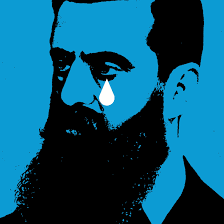
Herzl Crying

It is Tisha B’Av – the ninth day of the Hebrew month of Av and for many Jews it is a fast day; it is a day of mourning – remembering the destruction of the first and second Temples in Jerusalem and some say the expulsion of the Jews from Spain. Maybe because of its placement in the middle of the summer this is not one of my top ten holidays. Maybe because I have that old Reform theology in my head that asks where would we be if we were still offering animal sacrifices on a centralized altar in Jerusalem. Would we have synagogues; would we have Rabbis; would we recognize ourselves?

But this year Tisha B’Av snuck up on me and said: pay attention. When the Temple was destroyed and Jerusalem laid waste, our national identity was destroyed. The second Jewish commonwealth disappeared and although not erased from history, we began our dispersion, our wandering, our dependence on the tolerance of emperors, monarchs, religious leaders, dictators, and political systems we were not a part of. And so began the slow and tortured march to the Inquisition and the Holocaust.

It took us almost 2000 years to regain Jewish sovereignty. When Theodore Herzl championed a national homeland for the Jewish people and created modern political Zionism, he envisioned an open society where Jews of all stripes and colors, all beliefs and cultures could feel at home. You can read about it in his utopian novel, “AltneuLand” (Old-New Land), published in 1902. If you are following the current Israeli political crisis, you know that many observers believe that the crisis concerning the “judicial overhaul” is about Israel’s national identity. Will it continue to be open and innovative, pluralistic, democratic? Will it be the Israel we are so proud of?

Tali texted me yesterday and asked – are we an ethnicity? I don’t know if she was filling out a form or where this came from. (Texts are limited in the amount of information they impart.) But I answered: “Yes, and more. Its complicated.” Well, it is and it isn’t. We are a people; we care about each other; we care what happens to Jews wherever they live. Do we care more than we care about non-Jews in Asia or Africa or Central America? Well language tells a little bit of the story. We divide the world into Jews and non-Jews. We care about people in need everywhere, but we begin by caring about our own.

And so Tisha B’Av. If nothing else, tells the heartbreaking story of Jewish powerlessness. It reminds me how much and why I care about the future of Israel society. I am so proud of the scope of the Israeli protesters who are writing a new chapter in Herzl’s novel. They are fighting for the soul of the nation. They give me hope and that’s not a small thing. I am proud of every step they take in their march from Tel Aviv to Jerusalem, in their willingness to stand up for their ideals. I may be idealizing them and maybe a little naïve, but I think they could teach us a thing or two.

Waiting

I’m waiting for Kohler to call me back. The kitchen faucet spray button has fallen off and I can’t get it re-attached. Neither can the very nice person at Ferguson who looked at it and said, “here is the model number and the name of the faucet. Try calling Kohler and see if they will replace the head.” After several attempts at sending me to their website, the automated voice command told me I had a 12-minute wait. I didn’t take that as a promise. Eventually they offered me one of those call back options when the next available customer service rep was available during normal business hours.

I am optimistic but realistic. So much about life is about waiting. On my good days I can transform my waiting into anticipating. Like right now I am anticipating that this is an exercise in futility. It turns out I am wrong. It turns out I have to take back all the negative thoughts I had about getting a return call. And I have to take back all the predictions that they wouldn’t do anything about my issue. Andrew called me back just now and asked that I send them a picture of the broken piece to their email address. They say they are replacing the head! Ten to twelve business days. I can wait that long.

And then the phone rings again. Well, it doesn’t actually ring. Cell phones sing; cell phones buzz; cell phones chime; they make tonal music. But it doesn’t matter. In an instant the minutia of kitchen faucets became inane. The other side of the line (although there is no line anymore) was in crisis. It jolted me back to how tenuous our existence. How true the Yiddish saying that roughly translates into: We plan; God laughs. How we think we are in control of our lives, and we can expect things to evolve in the order we have programmed – but – we all know – life is unpredictable, and the art of living is managing the unexpected.

That brings us back to waiting. We expect our lives to progress in an even course. My Aunt Molly whose life was filled with sadness would say: Don’t kid yourself- we are all just waiting for the other shoe to drop.  In Jewish tradition we know about that other shoe just as we know about waiting. Some of us wait in-between eating milk and meat. We wait after a loved one has died before resuming our everyday routine. We wait for Yom Kippur to end so we can break our fast. We wait for the Messiah to change the arc of history. We wait for humanity to live up to its potential.

There is an argument about the characteristics of waiting. Do we just wait and anticipate that there will be a Divine intervention, or do we fill our waiting hours with learning moments finding patience and clarity as we hone into a new perspective about ourselves and the quality of life around us. Waiting it turns out is not passive. It gives us room to grow and time to process the unexpected. Waiting gives us opportunity to change paths; to deepen our experience of the now; to be surprised or disappointed; to feel.

I’m getting a new faucet. It’s the little things, you know.

I