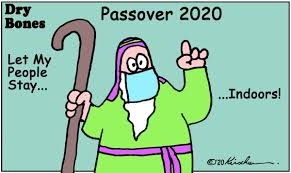
(A note of explanation: A friend called and said, “I will be alone Seder night. I am not comfortable with zoom – can you help me find a way to celebrate.” This is what came up …. A little long for my regular posts …. But here for you to use as you see fit ……
This night is different. Locked down; socially distant; isolated and feeling fearful of the next news cycle; wondering will the “plague” pass over my house and the homes of my loved ones. This night is different. It is hard to think of Seder meaning order when so much that is happening around us seems so random.
This night is different. The candles we light are festive reminders of faith and hope. I hear my mother blessing with her lips the Hebrew formula of praise and pleading with her heart the motto of her depression: This too shall pass. The flickering flames fight for survival. We need them to win; we need them to brighten the darkness of despair; to lift the veil so that we can see there is a way up and out of this vast and deep valley of desolation.
Thank God for wine. Whether red or white or any color in-between, pretend you are a master wine connoisseur, and let it linger in your mouth. Taste the earth, musky and full or dry and acid. There is a miracle on your tongue, the process from seed to bottle. It is worthy of blessing.
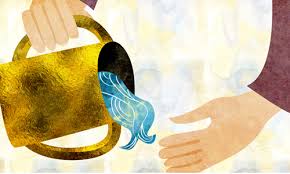
This night we wash. Hands in water in a bowl. In my house I pour from a pitcher and as a blonde and blue-eyed acolyte robed in white and red in a soaring cathedral, I offer my “priest” (the youngest child) the purity of being cleansed. But forget my silly fantasy. Add some soap to defeat the virus. Forget the bowl and pitcher. Wash well and as you lather sing an early Dayenu.
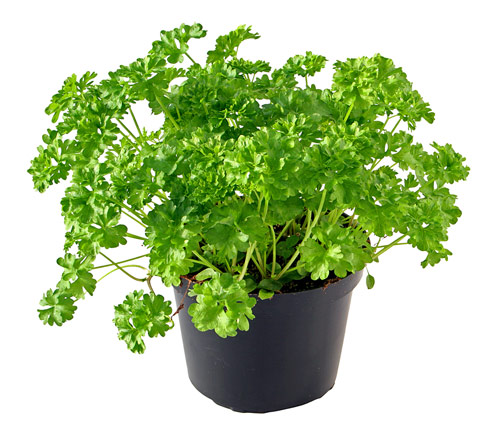
Parsley, peas and peapods, anything that grows green. It is Spring after all. And that means hope dipped in salt water. And that means we will get through this. And that means: Next year in Jerusalem, Paris or even Rome. That means next year in a crowded room, shoulder to shoulder, hot and sweaty, my good clothes itchy against my skin. Next year back too long and boring and when will we eat.
I guess this is turning out to be a different Haggadah or more precisely a different Seder. I don’t think I’ll get to all 14 steps and who has the patience for this anyway. It’s really all about the Matzah and the story that it tells. Rabbi Gamliel is quoted in the Haggadah as saying: “Anyone who has not said the following three things on Pesach has not fulfilled their obligation: the Passover sacrifice, matzah and maror.” So I’m saying them.
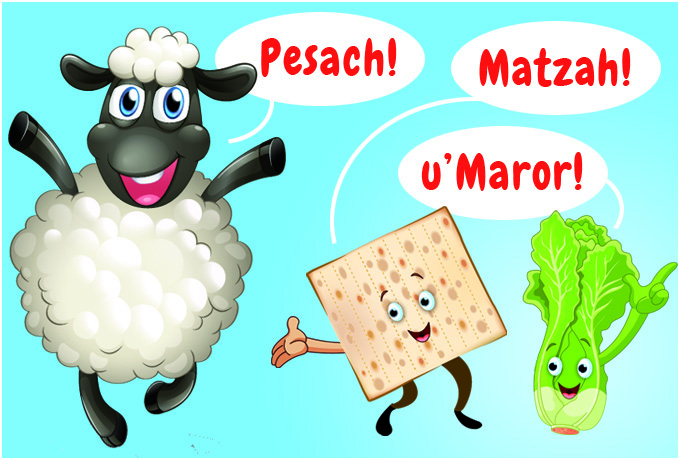
Pesach – in ancient times the sacrifice and aroma of roasting lamb. How much has to be sacrificed in order to preserve the miracle of freedom. The willingness to believe that we can be redeemed. That there is a force in the universe we can tap into to light our way and walk the murky path through a sea of reeds to the other side.
Matzah – break it now. Break it into two uneven pieces. (It would be a miracle if it split evenly.) The larger piece gets hidden. Maybe in the folds of your napkin; maybe in the margins of the book; maybe under a pillow; maybe behind a piece of furniture – hidden for a different generation to find. Because the story we tell of Egypt, slavery and the road to redemption is not just the story of us; it is the story of every generation; it is the story of them. I know we call it the bread of affliction but have you ever had matzah slathered with whipped butter and strawberry jam?
Maror – The Bitter herb. How much more do I need to say. It isn’t about denying the bitterness that comes with living. It isn’t about negating how hard it was to be a slave to Pharaoh. It is about recognizing the bitterness and finding a way to make it somewhat sweeter – like dipping the horseradish root into that mixture of apples or dates and nuts or apricots and wine and cinnamon or cardamom to make it bearable. So do you know what lettuce wraps look like in a restaurant: wrap your bitterness with the sweetness of family, friends, love, affection even if you have to do it from memory. Eat the Maror any way that works for you. But I would do it like Hillel used to, sandwiched between two pieces of Matzah, savoring with every bite the sweet and sugary stuff we call LIFE.

OMG! I almost forgot. Have you been sipping the wine? I hope so. The Seder calls for four glasses – each has its own promise. And with each sip we bless the story of liberation that we tell. It is a retelling of ancient truths that we are in this together. That we will find a way out of this together. That we do not tell this story just for us. We tell it to change the world connecting love and loss with life and liberty.
The Haggadah ends with a song about a parent and a goat. In one of my favorite poems, Nathan Alterman brings the song to life as his words help me conclude my Passover story. We are all clinging to the edges of the pages. We are living in the margins. But the strength of Passover is the promise of an open door and a world where plagues are drops of wine and each of us is living unafraid singing about tomorrow.
The Kid of the Haggadah
There in the market place, bleating among the billy goats and nannies,
Wagging his thin little tail—as thin as my finger—
Stood the Kid—downcast, outcast, the leavings of a poor man’s house,
Put up for sale without a bell, without even a ribbon, for just a couple of cents.
Not a single soul in the market paid him any attention,
For no one knew—not even the goldsmith, the sheep-shearer—
That this lonesome little Kid would enter the Haggadah
And his tale of woe become a mighty song.
But Daddy’s face lit up,
He walked over to pat the Kid’s forehead—and bought him.
And so began one of those songs
That people will sing for all history.
The Kid licked Daddy’s hand,
Nuzzled him with his wet little nose;
And this, my brother, will make the first verse of the song:
“One only Kid, one only Kid, that my father bought for two zuzim.”
It was a spring day, and the breezes danced;
Young girls winked and giggled, flashed their eyes;
While Daddy and the Kid walked into the Haggadah
To stand there together—small nose in large hand, large hand on small nose.
To find in the Haggadah—
So full already of miracles and marvels—
A peaceful place on the last page,
Where they can hug each other and cling to the edge of the story.
And this very Haggadah whispers,
“Join us…you’re welcome here … you belong,
Among my pages full of smoke and blood,
Among the great and ancient tales I tell.”
So I know the sea was not split in vain,
Deserts not crossed in vain—
If at the end of the story stand Daddy and the Kid
Looking forward and knowing their turn will come.
Happy Passover!!
 rabbiunplugged
Thank you Rabbi. This is exactly what I needed to read at this moment in time. I feel so helpless. But I have hope.
Happy Passover to you and your family.
Sending love and virtual hugs.
Jane
LikeLiked by 1 person
Brilliant
LikeLiked by 1 person
thank you – hope and gladness for the future. You brought me back to my myriad of memories of Passover and I smiled.
LikeLiked by 1 person
Terrific, thanks for sharing. Chat Samaach hpasybPassover
Sent from my iPhone
>
LikeLiked by 1 person
Thank you for your words. They are filling a void. Passover greetings to you and Eileen and your family
LikeLike
BRAVO !
Just a couple of things that you failed to address;
1. The Afikoman – Since I will not have my grandchildren around to look for the afikomen, is it permissible for me to write myself a note as to where I hid it?
2. Elijah – Since Elijah circles the world to resolve all questions and proclaim the advent of the messianic age, does the present need for “Social Distancing” preclude opening the door and inviting him in for the 5th cup?
Your considered wisdom is required.
Shalom
Larry
LikeLike
Perfect, Rabbi! You always know just what to say to everyone on every occasion! I don’t know how you got so wise, but you sure make me feel better sometimes. Thank you for these thoughts this Pesach. I am going to read it all again with four glasses of wine on the first night of Passover.
You’re the best! Thanks again,
Dorit
LikeLike
Thanks for this, Howard. I shared this with a friend who I know will be alone tonight.
LikeLike